
Ultrasound of the scrotum
Scrotal ultrasound at the "Genesis Dnipro" clinic — accurate diagnosis of men's health.
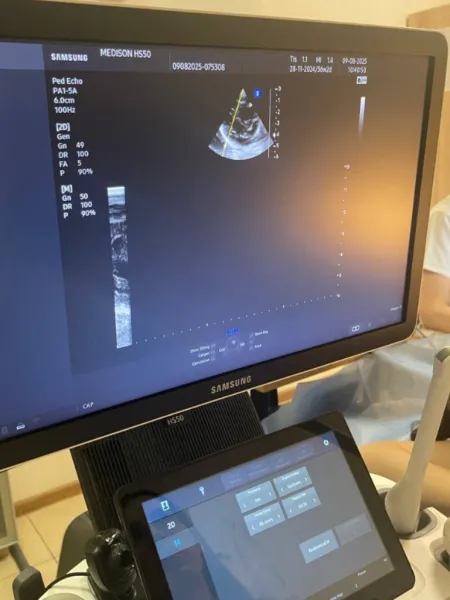
Scrotal and Testicular Ultrasound:
What is it?
• A safe method for examining male reproductive organs, including the testicles, epididymis, and spermatic cord.
• Often used for pain, scrotal enlargement, or fertility issues.
Why is a scrotal and testicular ultrasound performed?
• To diagnose inflammatory diseases (orchitis, epididymitis).
• When varicocele (enlargement of veins) is suspected.
• To detect cysts, tumors, and other growths.
• In cases of infertility.
• After scrotal injuries.
What can be seen on an ultrasound?
• The size and structure of the testicles and epididymis.
• Presence of cysts, tumors, or inflammatory changes.
• Varicocele (using Doppler ultrasound).
• Fluid accumulation (hydrocele).
When is it prescribed?
• For scrotal pain or enlargement.
• After injuries.
• In cases of male infertility.
• When inflammation or varicocele is suspected.
• For post-operative monitoring.
Preparation for the procedure:
• No special preparation is required.
• The examination can be done at any time.
How the procedure is performed:
• The patient lies on an examination table.
• A special gel is applied to the scrotal skin.
• The doctor gently moves the transducer to assess internal structures.
• The examination takes 10–15 minutes.
What is it?
• A safe method for examining male reproductive organs, including the testicles, epididymis, and spermatic cord.
• Often used for pain, scrotal enlargement, or fertility issues.
Why is a scrotal and testicular ultrasound performed?
• To diagnose inflammatory diseases (orchitis, epididymitis).
• When varicocele (enlargement of veins) is suspected.
• To detect cysts, tumors, and other growths.
• In cases of infertility.
• After scrotal injuries.
What can be seen on an ultrasound?
• The size and structure of the testicles and epididymis.
• Presence of cysts, tumors, or inflammatory changes.
• Varicocele (using Doppler ultrasound).
• Fluid accumulation (hydrocele).
When is it prescribed?
• For scrotal pain or enlargement.
• After injuries.
• In cases of male infertility.
• When inflammation or varicocele is suspected.
• For post-operative monitoring.
Preparation for the procedure:
• No special preparation is required.
• The examination can be done at any time.
How the procedure is performed:
• The patient lies on an examination table.
• A special gel is applied to the scrotal skin.
• The doctor gently moves the transducer to assess internal structures.
• The examination takes 10–15 minutes.


