
Investigation of all organs of the abdominal cavity
Abdominal ultrasound — diagnostics of the liver, gallbladder, pancreas, and more.
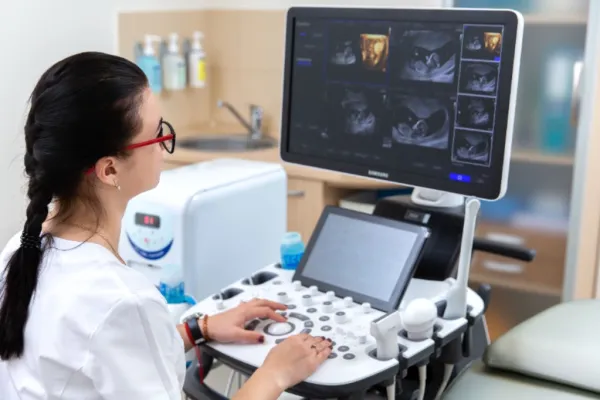
Ultrasound examination of the abdominal organs (ultrasound) is one of the most informative, safe, and painless diagnostic methods that helps a doctor assess the condition of internal organs and timely detect possible pathologies.
The procedure requires no complex preparation, takes 15–30 minutes, and is suitable for patients of any age, including children and the elderly.
What is included in an abdominal ultrasound
During the examination, the doctor evaluates the structure, size, location, and functional features of the following organs:
🫀 Liver — its size, structure, presence of diffuse or focal changes, cysts, fatty liver disease, tumors are determined.
🫧 Gallbladder and bile ducts — the shape, presence of stones, inflammation, kinks, bile stasis are assessed.
🩹 Pancreas — the structure of the parenchyma, signs of pancreatitis, cysts, and other neoplasms are checked.
⚖️ Spleen — size and echostructure, presence of enlargement or damage are evaluated.
💧 Kidneys (sometimes included in a comprehensive study) — size, structure, presence of stones, cysts, or inflammations are determined.
🫙 Hepatic portal vein and abdominal vessels — blood flow, signs of portal hypertension, and other vascular disorders are analyzed.
🩸 Retroperitoneal organs — if necessary, the condition of the adrenal glands, lymph nodes, and surrounding tissues is assessed.
When an abdominal ultrasound is recommended
Ultrasound is indicated both for prevention and in the presence of certain symptoms:
Pain or discomfort in the abdomen
Heaviness after eating, bloating, nausea
Suspicion of stones in the gallbladder or kidneys
Elevated liver enzymes in blood tests
Suspicion of tumors or metastases
Abdominal injuries
Monitoring the condition of organs in chronic diseases
For prevention, doctors recommend undergoing a comprehensive abdominal ultrasound once a year even in the absence of complaints.
Advantages of ultrasound
✅ Absolutely painless and safe
✅ No radiation exposure
✅ Suitable for children, pregnant women, and the elderly
✅ High informativeness and accuracy
✅ Results — immediately after the examination
Preparation for the study
To ensure the ultrasound results are as accurate as possible, it is recommended to:
Exclude foods that cause gas formation (legumes, cabbage, carbonated drinks) from the diet 2–3 days prior
Conduct the study on an empty stomach or after 6–8 hours of fasting
If prone to flatulence — in agreement with a doctor, sorbents can be taken
✅ Abdominal ultrasound is a simple, safe, and accurate way to learn about the condition of vital organs and timely detect hidden diseases.
The procedure requires no complex preparation, takes 15–30 minutes, and is suitable for patients of any age, including children and the elderly.
What is included in an abdominal ultrasound
During the examination, the doctor evaluates the structure, size, location, and functional features of the following organs:
🫀 Liver — its size, structure, presence of diffuse or focal changes, cysts, fatty liver disease, tumors are determined.
🫧 Gallbladder and bile ducts — the shape, presence of stones, inflammation, kinks, bile stasis are assessed.
🩹 Pancreas — the structure of the parenchyma, signs of pancreatitis, cysts, and other neoplasms are checked.
⚖️ Spleen — size and echostructure, presence of enlargement or damage are evaluated.
💧 Kidneys (sometimes included in a comprehensive study) — size, structure, presence of stones, cysts, or inflammations are determined.
🫙 Hepatic portal vein and abdominal vessels — blood flow, signs of portal hypertension, and other vascular disorders are analyzed.
🩸 Retroperitoneal organs — if necessary, the condition of the adrenal glands, lymph nodes, and surrounding tissues is assessed.
When an abdominal ultrasound is recommended
Ultrasound is indicated both for prevention and in the presence of certain symptoms:
Pain or discomfort in the abdomen
Heaviness after eating, bloating, nausea
Suspicion of stones in the gallbladder or kidneys
Elevated liver enzymes in blood tests
Suspicion of tumors or metastases
Abdominal injuries
Monitoring the condition of organs in chronic diseases
For prevention, doctors recommend undergoing a comprehensive abdominal ultrasound once a year even in the absence of complaints.
Advantages of ultrasound
✅ Absolutely painless and safe
✅ No radiation exposure
✅ Suitable for children, pregnant women, and the elderly
✅ High informativeness and accuracy
✅ Results — immediately after the examination
Preparation for the study
To ensure the ultrasound results are as accurate as possible, it is recommended to:
Exclude foods that cause gas formation (legumes, cabbage, carbonated drinks) from the diet 2–3 days prior
Conduct the study on an empty stomach or after 6–8 hours of fasting
If prone to flatulence — in agreement with a doctor, sorbents can be taken
✅ Abdominal ultrasound is a simple, safe, and accurate way to learn about the condition of vital organs and timely detect hidden diseases.


