
Ultrasound gynecological (with the use of a vaginal probe)
Gynecological ultrasound with a vaginal probe — accurate diagnosis of women's health.
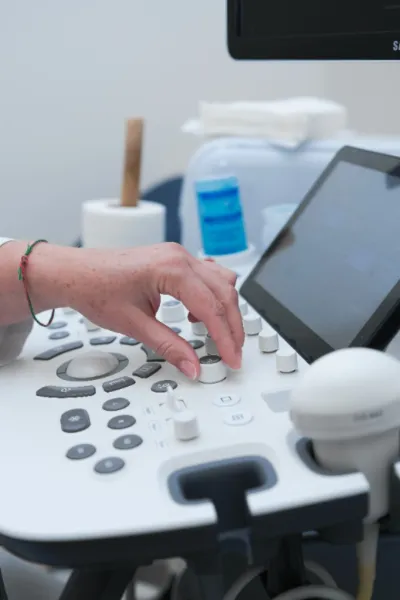
Gynecological Ultrasound Using a Vaginal Probe (Transvaginal Ultrasound)
What is it?
• A method of ultrasound examination of the pelvic organs using a special vaginal probe.
• The probe is inserted into the vagina, allowing for more accurate and detailed imaging compared to abdominal examination.
• The procedure is safe, painless, and does not involve radiation.
Why is a transvaginal ultrasound performed?
• For a detailed assessment of the uterus, endometrium, and ovaries.
• In cases of complaints about lower abdominal pain, irregular or painful menstruation.
• To detect cysts, fibroids, polyps, endometriosis, and other pathologies.
• To monitor ovulation and diagnose causes of infertility.
• For early confirmation of pregnancy and assessment of its progression.
What can be seen during the examination:
• The structure and thickness of the endometrium.
• The size and condition of the uterus and ovaries.
• Follicles in the ovaries and evidence of ovulation.
• Cysts, fibroids, polyps, or other formations.
• Signs of inflammation or adhesions.
• Pregnancy at the earliest stages (from 2–3 weeks after conception).
When is it prescribed?
• In cases of complaints about pain, bleeding, or delayed menstruation.
• When planning a pregnancy or suspecting infertility.
• To assess the effectiveness of treatment or monitor post-surgery.
• For monitoring in early pregnancy.
How the procedure is conducted:
• The patient is positioned on a gynecological chair or couch.
• A disposable cover is placed on the probe, and a special gel is applied.
• The probe is gently inserted into the vagina to a shallow depth.
• The image is displayed on a screen, and the doctor records data and takes images.
• The procedure lasts about 10–15 minutes.
• No recovery period is needed after the examination, and normal activities can be resumed immediately.
What is it?
• A method of ultrasound examination of the pelvic organs using a special vaginal probe.
• The probe is inserted into the vagina, allowing for more accurate and detailed imaging compared to abdominal examination.
• The procedure is safe, painless, and does not involve radiation.
Why is a transvaginal ultrasound performed?
• For a detailed assessment of the uterus, endometrium, and ovaries.
• In cases of complaints about lower abdominal pain, irregular or painful menstruation.
• To detect cysts, fibroids, polyps, endometriosis, and other pathologies.
• To monitor ovulation and diagnose causes of infertility.
• For early confirmation of pregnancy and assessment of its progression.
What can be seen during the examination:
• The structure and thickness of the endometrium.
• The size and condition of the uterus and ovaries.
• Follicles in the ovaries and evidence of ovulation.
• Cysts, fibroids, polyps, or other formations.
• Signs of inflammation or adhesions.
• Pregnancy at the earliest stages (from 2–3 weeks after conception).
When is it prescribed?
• In cases of complaints about pain, bleeding, or delayed menstruation.
• When planning a pregnancy or suspecting infertility.
• To assess the effectiveness of treatment or monitor post-surgery.
• For monitoring in early pregnancy.
How the procedure is conducted:
• The patient is positioned on a gynecological chair or couch.
• A disposable cover is placed on the probe, and a special gel is applied.
• The probe is gently inserted into the vagina to a shallow depth.
• The image is displayed on a screen, and the doctor records data and takes images.
• The procedure lasts about 10–15 minutes.
• No recovery period is needed after the examination, and normal activities can be resumed immediately.


