
Ultrasound gynecological abdominal
Gynecological ultrasound through the abdomen — abdominal transducer
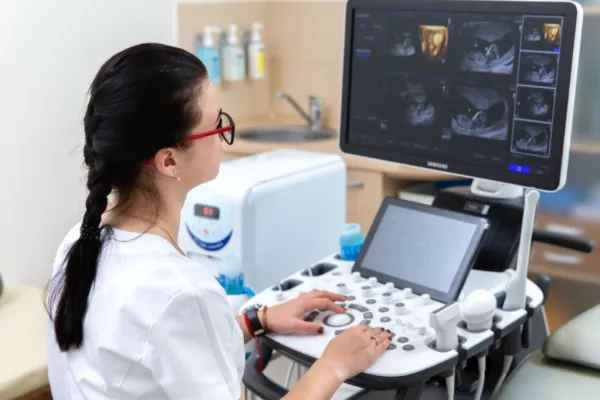
Gynecological Ultrasound Through the Abdomen (Transabdominal Ultrasound)
What it is:
• A method of ultrasound examination of the pelvic organs using an abdominal probe.
• The probe is placed on the surface of the abdomen, and the image of the organs is displayed on a screen.
• It is a non-invasive, safe, and painless procedure.
Why transabdominal ultrasound is performed:
• To assess the overall condition of the pelvic organs.
• In cases where a vaginal ultrasound is undesirable (e.g., in girls and women who are not sexually active).
• To monitor the progress of pregnancy, especially in later stages.
• For complaints of pain, irregular bleeding, or other disorders.
What can be seen during the examination:
• The size and shape of the uterus.
• The thickness of the endometrium.
• The ovaries and any possible formations within them.
• The presence of large fibroids, cysts, or other growths.
• The condition of the pregnancy.
When it is prescribed:
• For a preventive examination.
• For complaints of pain or bleeding.
• When planning a pregnancy.
• When a transvaginal ultrasound cannot be performed.
Preparation for the procedure:
• It is important for the bladder to be full, as this improves the visualization of the pelvic organs.
• It is recommended to drink 0.5–1 liter of non-carbonated water 1–1.5 hours before the examination and not to urinate until the procedure is completed.
• No other special preparation is required.
How the procedure is conducted:
• The patient lies on her back on an examination table.
• A special gel is applied to the skin of the abdomen for better contact with the probe.
• The doctor moves the probe over the lower abdomen, displaying the image of the organs on the screen.
• The examination takes about 10–15 minutes.
• You can return to your normal activities immediately after the ultrasound.
What it is:
• A method of ultrasound examination of the pelvic organs using an abdominal probe.
• The probe is placed on the surface of the abdomen, and the image of the organs is displayed on a screen.
• It is a non-invasive, safe, and painless procedure.
Why transabdominal ultrasound is performed:
• To assess the overall condition of the pelvic organs.
• In cases where a vaginal ultrasound is undesirable (e.g., in girls and women who are not sexually active).
• To monitor the progress of pregnancy, especially in later stages.
• For complaints of pain, irregular bleeding, or other disorders.
What can be seen during the examination:
• The size and shape of the uterus.
• The thickness of the endometrium.
• The ovaries and any possible formations within them.
• The presence of large fibroids, cysts, or other growths.
• The condition of the pregnancy.
When it is prescribed:
• For a preventive examination.
• For complaints of pain or bleeding.
• When planning a pregnancy.
• When a transvaginal ultrasound cannot be performed.
Preparation for the procedure:
• It is important for the bladder to be full, as this improves the visualization of the pelvic organs.
• It is recommended to drink 0.5–1 liter of non-carbonated water 1–1.5 hours before the examination and not to urinate until the procedure is completed.
• No other special preparation is required.
How the procedure is conducted:
• The patient lies on her back on an examination table.
• A special gel is applied to the skin of the abdomen for better contact with the probe.
• The doctor moves the probe over the lower abdomen, displaying the image of the organs on the screen.
• The examination takes about 10–15 minutes.
• You can return to your normal activities immediately after the ultrasound.


