Gynecological ultrasound examination (ultrasound) is a safe and informative diagnostic method that allows a doctor to assess the condition of a woman's pelvic organs. The examination is conducted using ultrasound waves and does not have a negative impact on the body, so it can be performed multiple times if necessary.
Reasons for gynecological ultrasound:
• For preventive monitoring of the condition of pelvic organs.
Reasons for gynecological ultrasound:
• For preventive monitoring of the condition of pelvic organs.
Reasons for gynecological ultrasound:
• For preventive monitoring of the condition of pelvic organs.
• In cases of lower abdominal pain or menstrual cycle irregularities.
• When there is suspicion of inflammatory diseases, cysts, fibroids, polyps, or endometriosis.
• To assess ovulation and monitor reproductive health.
• During pregnancy — to observe fetal development and the condition of the uterus.
What can be seen on an ultrasound:
• The size and structure of the uterus and ovaries.
• The thickness and structure of the endometrium.
• The presence of cysts, fibroids, polyps, or other growths.
• Signs of inflammation or adhesions.
• Follicle maturation and evidence of ovulation.
• The condition of early pregnancy.
When an ultrasound is prescribed:
• Routine examination as part of preventive care.
• Complaints of pain, bleeding, or irregular cycles.
• Preparation for pregnancy or infertility treatment.
• Post-operative or treatment monitoring.
• Pregnancy monitoring.
How the procedure is conducted:
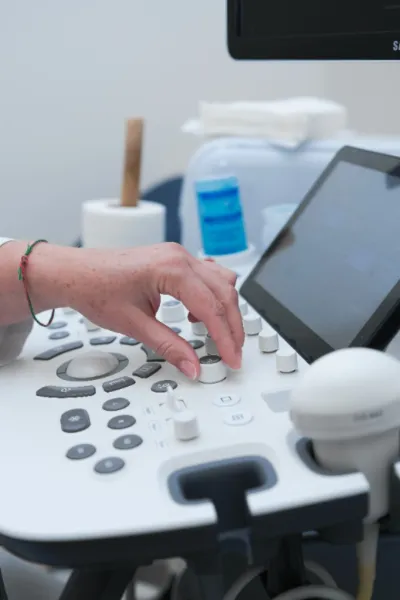
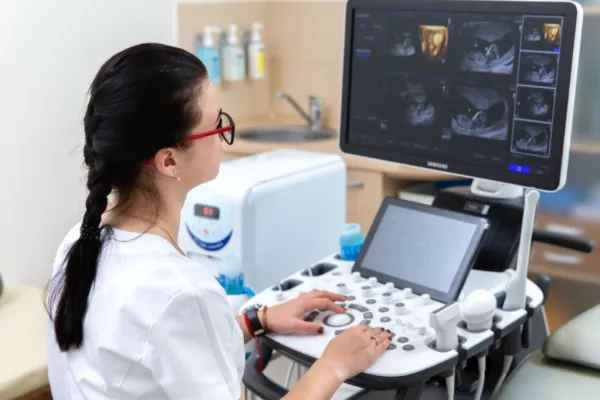
The patient arrives for the appointment and takes a comfortable position on the examination table. The doctor uses a special transducer and applies gel for better contact. The image of the organs is displayed on a screen. On average, the examination takes 10–20 minutes. After the ultrasound, the patient can immediately return to normal life, with no restrictions.
Вас может проконсультировать врач высшей категории, КМН, Перелыгин И.В.