
Ultrasound of the heart (echocardiography) for children
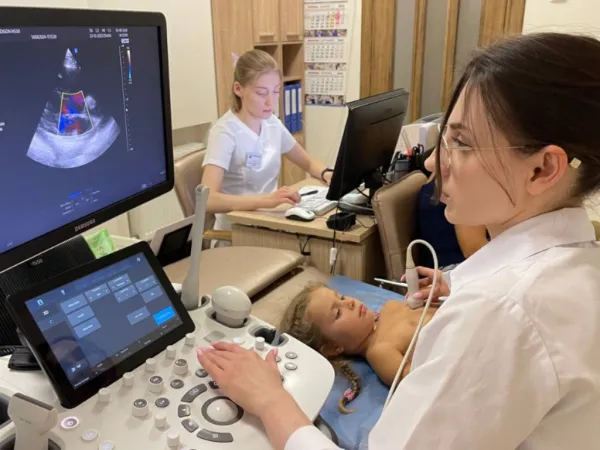
Echocardiography for children (heart ultrasound) is a safe and painless diagnostic method that allows doctors to assess the structure and function of a child's heart. The procedure is performed using an ultrasound machine and is similar to a regular ultrasound: a special gel is applied to the chest, and a transducer transmits images of the heart to a screen.
Reasons for performing a heart ultrasound on children include:
- Diagnosing congenital heart defects;
- Presence of a heart murmur;
- If the child experiences shortness of breath, blue lips, or rapid fatigue;
- Suspected inflammation of the heart muscle (myocarditis) or other heart conditions;
- As a follow-up after infections or surgeries.
The examination can be conducted from the first days of life and does not require special preparation. Echocardiography helps detect abnormalities at an early stage and allows for timely treatment.
Reasons for performing a heart ultrasound on children include:
- Diagnosing congenital heart defects;
- Presence of a heart murmur;
- If the child experiences shortness of breath, blue lips, or rapid fatigue;
- Suspected inflammation of the heart muscle (myocarditis) or other heart conditions;
- As a follow-up after infections or surgeries.
The examination can be conducted from the first days of life and does not require special preparation. Echocardiography helps detect abnormalities at an early stage and allows for timely treatment.


