
Laparoscopy
Laparoscopy is a surgical procedure that allows doctors to access the inside of the abdomen and pelvis without making large incisions in the skin. It is also known as minimally invasive surgery. During the procedure, a small tube with a camera, called a laparoscope, is inserted through a small incision, allowing the surgeon to view the internal organs on a screen and perform necessary operations with specialized instruments.
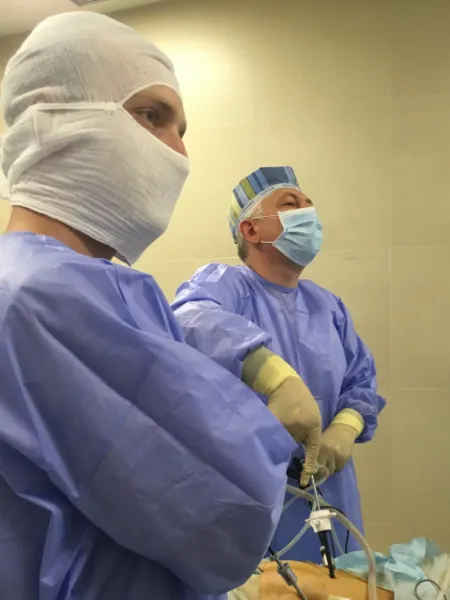
Laparoscopy in Gynecology: A Modern Method of Diagnosis and Treatment Without Incisions
Laparoscopy is a minimally invasive surgical technique where operations are performed through small incisions in the abdominal wall using a special instrument called a laparoscope. This method is widely used in gynecology for diagnosing and treating various pelvic organ conditions.
The main advantage of laparoscopy is the absence of large incisions, minimal trauma, and quick recovery. Thanks to modern technology, it has become the "gold standard" in gynecological surgery, replacing traditional open surgeries in many cases.
When Laparoscopy is Recommended
Laparoscopy can be used for both diagnostic and therapeutic purposes.
Main indications for diagnostic laparoscopy:
- Unexplained infertility
- Suspected endometriosis
- Pelvic organ adhesions
- Ovarian tumors and cysts
- Suspected ectopic pregnancy
- Chronic pelvic pain of unknown origin
Indications for therapeutic laparoscopy:
- Removal of ovarian cysts
- Ovarian resection for polycystic ovary syndrome
- Treatment of endometriosis
- Restoration of fallopian tube patency
- Removal of fibroid nodules
- Treatment of adhesion processes
- Removal of the uterus or its appendages when indicated
- Termination of ectopic pregnancy
How a Laparoscopic Surgery is Performed
Laparoscopy is performed in an operating room under general anesthesia and consists of several stages:
1. Preparation and anesthesia. The patient is given anesthesia, after which the doctor makes 2–4 small incisions (0.5–1 cm) in the abdominal area.
2. Insertion of the laparoscope. A laparoscope, a thin tube with a camera, is inserted through one of the incisions, transmitting images to a screen. This allows the surgeon to see the pelvic organs with high precision.
3. Performing the operation. Special instruments are inserted through other incisions, allowing the doctor to perform necessary manipulations: remove cysts, excise adhesions, perform resections, etc.
4. Completion of the procedure. After the operation, the instruments are removed, and the incisions are closed with cosmetic stitches that leave virtually no marks.
The operation usually lasts from 30 minutes to 2 hours, depending on the extent of the intervention. The patient can typically be discharged the same day or within 1–2 days.
Advantages of Laparoscopy
Modern laparoscopic technologies offer several undeniable advantages over classical surgery:
- Minimal tissue trauma
- No large incisions or scars
- Quick recovery (7–14 days)
- Reduced risk of infections and complications
- Minimal blood loss
- More accurate visualization of pelvic organs
- Possibility of simultaneous diagnosis and treatment
Thanks to these advantages, laparoscopy is widely used even in young patients planning pregnancy.
Recovery After Laparoscopy
The rehabilitation period after laparoscopic surgery is usually easy and quick. Within 4–6 hours after the procedure, the woman can get up, and discharge typically occurs within 1–2 days.
Post-laparoscopy recommendations:
- Avoid physical exertion and heavy lifting for 2–3 weeks
- Abstain from sexual activity for 2–4 weeks
- Follow a diet in the first days (light food, plenty of fluids)
- Monitor the condition of the stitches and maintain hygiene
- Attend follow-up appointments with a gynecologist
Full recovery takes 2–4 weeks, after which the woman can return to her usual lifestyle and plan pregnancy (if the surgery was performed to address infertility causes).
Possible Risks and Complications
Although laparoscopy is considered a safe surgical method, like any intervention, it can have rare complications:
- Bleeding
- Infection of the incisions
- Damage to adjacent organs (extremely rare)
- Allergic reactions to anesthesia
Performing the operation by an experienced surgeon and thorough preparation minimize the risk of complications.
Laparoscopy in gynecology is an effective, gentle, and highly accurate method of diagnosis and treatment, allowing a wide range of women's issues to be addressed without severe consequences and lengthy rehabilitation.
Modern technologies make this procedure as safe and comfortable as possible, preserving a woman's reproductive health and improving quality of life.
Laparoscopy is a minimally invasive surgical technique where operations are performed through small incisions in the abdominal wall using a special instrument called a laparoscope. This method is widely used in gynecology for diagnosing and treating various pelvic organ conditions.
The main advantage of laparoscopy is the absence of large incisions, minimal trauma, and quick recovery. Thanks to modern technology, it has become the "gold standard" in gynecological surgery, replacing traditional open surgeries in many cases.
When Laparoscopy is Recommended
Laparoscopy can be used for both diagnostic and therapeutic purposes.
Main indications for diagnostic laparoscopy:
- Unexplained infertility
- Suspected endometriosis
- Pelvic organ adhesions
- Ovarian tumors and cysts
- Suspected ectopic pregnancy
- Chronic pelvic pain of unknown origin
Indications for therapeutic laparoscopy:
- Removal of ovarian cysts
- Ovarian resection for polycystic ovary syndrome
- Treatment of endometriosis
- Restoration of fallopian tube patency
- Removal of fibroid nodules
- Treatment of adhesion processes
- Removal of the uterus or its appendages when indicated
- Termination of ectopic pregnancy
How a Laparoscopic Surgery is Performed
Laparoscopy is performed in an operating room under general anesthesia and consists of several stages:
1. Preparation and anesthesia. The patient is given anesthesia, after which the doctor makes 2–4 small incisions (0.5–1 cm) in the abdominal area.
2. Insertion of the laparoscope. A laparoscope, a thin tube with a camera, is inserted through one of the incisions, transmitting images to a screen. This allows the surgeon to see the pelvic organs with high precision.
3. Performing the operation. Special instruments are inserted through other incisions, allowing the doctor to perform necessary manipulations: remove cysts, excise adhesions, perform resections, etc.
4. Completion of the procedure. After the operation, the instruments are removed, and the incisions are closed with cosmetic stitches that leave virtually no marks.
The operation usually lasts from 30 minutes to 2 hours, depending on the extent of the intervention. The patient can typically be discharged the same day or within 1–2 days.
Advantages of Laparoscopy
Modern laparoscopic technologies offer several undeniable advantages over classical surgery:
- Minimal tissue trauma
- No large incisions or scars
- Quick recovery (7–14 days)
- Reduced risk of infections and complications
- Minimal blood loss
- More accurate visualization of pelvic organs
- Possibility of simultaneous diagnosis and treatment
Thanks to these advantages, laparoscopy is widely used even in young patients planning pregnancy.
Recovery After Laparoscopy
The rehabilitation period after laparoscopic surgery is usually easy and quick. Within 4–6 hours after the procedure, the woman can get up, and discharge typically occurs within 1–2 days.
Post-laparoscopy recommendations:
- Avoid physical exertion and heavy lifting for 2–3 weeks
- Abstain from sexual activity for 2–4 weeks
- Follow a diet in the first days (light food, plenty of fluids)
- Monitor the condition of the stitches and maintain hygiene
- Attend follow-up appointments with a gynecologist
Full recovery takes 2–4 weeks, after which the woman can return to her usual lifestyle and plan pregnancy (if the surgery was performed to address infertility causes).
Possible Risks and Complications
Although laparoscopy is considered a safe surgical method, like any intervention, it can have rare complications:
- Bleeding
- Infection of the incisions
- Damage to adjacent organs (extremely rare)
- Allergic reactions to anesthesia
Performing the operation by an experienced surgeon and thorough preparation minimize the risk of complications.
Laparoscopy in gynecology is an effective, gentle, and highly accurate method of diagnosis and treatment, allowing a wide range of women's issues to be addressed without severe consequences and lengthy rehabilitation.
Modern technologies make this procedure as safe and comfortable as possible, preserving a woman's reproductive health and improving quality of life.


