
SCLEROTHERAPY
Sclerotherapy is an effective non-surgical treatment for varicose veins.
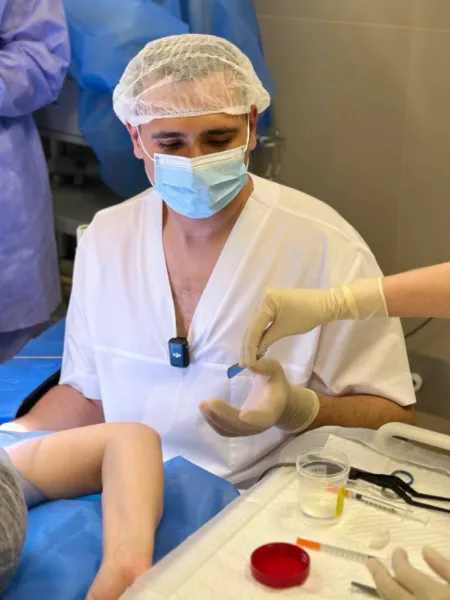
What is Sclerotherapy
Sclerotherapy is a modern minimally invasive method for treating varicose veins, where a special medication called a sclerosant is injected into the lumen of the affected vein, causing the walls to "stick" together and subsequently dissolve. As a result, blood flow is redirected to healthy vessels, and the varicose vein gradually disappears.
The method is characterized by high effectiveness, safety, and excellent cosmetic results, making it one of the most sought-after procedures in phlebology.
When Sclerotherapy is Recommended
The procedure is indicated in the early and middle stages of varicose disease, as well as an adjunct to other treatment methods. Main indications include:
Varicose dilation of superficial veins
"Spider veins" and capillary networks
Reticular (small) varicose veins
Recurrence of varicose veins after surgical intervention
Preparation for surgical treatment of varicose disease
How the Procedure is Conducted
Sclerotherapy is performed on an outpatient basis, does not require anesthesia, and takes 15–30 minutes. Procedure steps include:
Examination and ultrasound assessment of veins.
Injection of the sclerosing agent with a very fine needle directly into the affected vessel.
"Sticking" of the vein walls and its gradual exclusion from blood flow.
Application of a compression bandage or wearing compression stockings.
The patient can leave the clinic immediately after the procedure and return to normal activities the same day.
Types of Sclerotherapy
💉 Microsclerotherapy — for treating vascular networks and "spider veins."
🫧 Foam (foam-form) sclerotherapy — more effective for treating larger veins.
🔬 Echo-sclerotherapy — performed under ultrasound guidance for precise medication delivery.
Advantages of Sclerotherapy
✅ Non-surgical method — no anesthesia, incisions, or stitches
✅ Quick and painless — procedure takes 15–30 minutes
✅ Outpatient — no hospitalization or long recovery needed
✅ Cosmetic effect — disappearance of varicose veins and vascular networks
✅ Compatibility with other methods — can be combined with laser or miniphlebectomy
Post-Procedure Recommendations
Wear compression stockings for 7–14 days
Walk for 20–30 minutes daily
Avoid hot baths, saunas, and strenuous activities for the first 1–2 weeks
Attend a follow-up examination in 7–10 days
Initial results become noticeable within 2–4 weeks, with the final effect visible in 1–3 months.
💡 Sclerotherapy is a safe and effective way to eliminate varicose veins and vascular networks without surgery, incisions, or lengthy recovery. The procedure restores health, lightness, and an aesthetic appearance to the legs.
Sclerotherapy is a modern minimally invasive method for treating varicose veins, where a special medication called a sclerosant is injected into the lumen of the affected vein, causing the walls to "stick" together and subsequently dissolve. As a result, blood flow is redirected to healthy vessels, and the varicose vein gradually disappears.
The method is characterized by high effectiveness, safety, and excellent cosmetic results, making it one of the most sought-after procedures in phlebology.
When Sclerotherapy is Recommended
The procedure is indicated in the early and middle stages of varicose disease, as well as an adjunct to other treatment methods. Main indications include:
Varicose dilation of superficial veins
"Spider veins" and capillary networks
Reticular (small) varicose veins
Recurrence of varicose veins after surgical intervention
Preparation for surgical treatment of varicose disease
How the Procedure is Conducted
Sclerotherapy is performed on an outpatient basis, does not require anesthesia, and takes 15–30 minutes. Procedure steps include:
Examination and ultrasound assessment of veins.
Injection of the sclerosing agent with a very fine needle directly into the affected vessel.
"Sticking" of the vein walls and its gradual exclusion from blood flow.
Application of a compression bandage or wearing compression stockings.
The patient can leave the clinic immediately after the procedure and return to normal activities the same day.
Types of Sclerotherapy
💉 Microsclerotherapy — for treating vascular networks and "spider veins."
🫧 Foam (foam-form) sclerotherapy — more effective for treating larger veins.
🔬 Echo-sclerotherapy — performed under ultrasound guidance for precise medication delivery.
Advantages of Sclerotherapy
✅ Non-surgical method — no anesthesia, incisions, or stitches
✅ Quick and painless — procedure takes 15–30 minutes
✅ Outpatient — no hospitalization or long recovery needed
✅ Cosmetic effect — disappearance of varicose veins and vascular networks
✅ Compatibility with other methods — can be combined with laser or miniphlebectomy
Post-Procedure Recommendations
Wear compression stockings for 7–14 days
Walk for 20–30 minutes daily
Avoid hot baths, saunas, and strenuous activities for the first 1–2 weeks
Attend a follow-up examination in 7–10 days
Initial results become noticeable within 2–4 weeks, with the final effect visible in 1–3 months.
💡 Sclerotherapy is a safe and effective way to eliminate varicose veins and vascular networks without surgery, incisions, or lengthy recovery. The procedure restores health, lightness, and an aesthetic appearance to the legs.


