
Inguinal hernia repair
Inguinal hernia repair is an effective surgical treatment without recurrences.
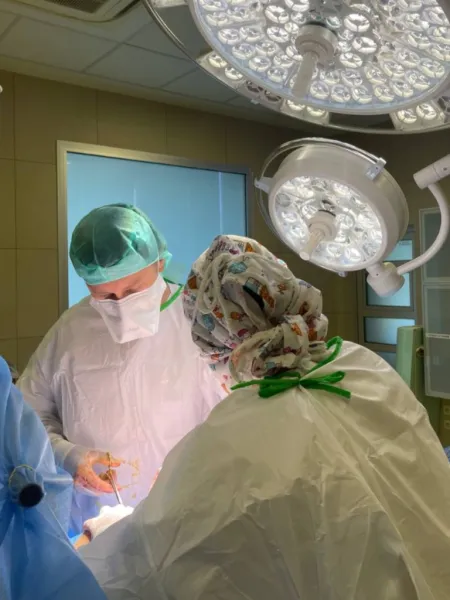
What is an inguinal hernia?
An inguinal hernia is a pathological condition where a part of the intestine, omentum, or other abdominal organs protrudes through a weak spot in the inguinal canal. It appears externally as a bulge in the groin area, which may increase when coughing, during physical exertion, or straining.
An inguinal hernia does not resolve on its own and requires surgical treatment. Without surgery, there is a risk of incarceration, a dangerous condition where the blood supply to the organs is compromised, potentially leading to peritonitis.
When is inguinal hernia repair necessary?
An inguinal hernia is an indication for planned or emergency surgery. You should consult a doctor if you notice:
- A bulge in the groin area that increases with exertion
- Discomfort, pain, heaviness, or burning in the groin
- The hernia increasing in size over time
- Digestive issues, abdominal bloating, constipation
- Signs of incarceration: sharp pain, nausea, vomiting, inability to reduce the hernia
How is inguinal hernia repair surgery performed?
Modern surgery offers two main methods for inguinal hernia repair:
1. Open hernioplasty (traditional repair)
2. Laparoscopic hernioplasty
Both methods are performed under spinal or general anesthesia and aim to return the organs to the abdominal cavity and strengthen the weak area of the muscle wall.
🔧 1. Open hernioplasty (traditional repair)
This is a classic and reliable method of surgical treatment.
Steps of the surgery:
- A small incision is made in the groin area (4–6 cm).
- The hernia contents are carefully returned to the abdominal cavity.
- The weak area of the wall is sutured and reinforced with either the patient's own tissues or a special mesh prosthetic fabric.
- Cosmetic stitches are applied.
⏱ Duration of the surgery is 30–60 minutes. Hospitalization is usually 1–2 days, and recovery takes 1–2 weeks.
✅ Advantages:
- High effectiveness
- Minimal risk of recurrence
- Suitable for patients of any age
🩺 2. Laparoscopic inguinal hernia repair
A minimally invasive technique performed through 2–3 incisions of 0.5–1 cm.
Steps of the surgery:
- A laparoscope with a camera is inserted into the abdominal cavity.
- The hernia contents are returned to their place.
- The weak spot is sutured and reinforced with a mesh implant from the inside.
⏱ Surgery time is 40–60 minutes. Discharge is possible the next day.
✅ Advantages of laparoscopy:
- Minimal invasiveness and quick recovery period
- Unnoticeable scars
- Lower risk of postoperative complications
- Return to active life within 5–7 days
Postoperative period and recommendations:
- Gentle physical activity for 2–4 weeks
- Wearing a supportive bandage as recommended by the doctor
- Avoiding heavy lifting and active exertion
- Follow-up examinations and adherence to a diet
Full recovery after surgery usually takes 2–4 weeks, after which the patient can return to normal life.
💡 Inguinal hernia repair is a reliable and effective treatment method that eliminates unpleasant symptoms, prevents dangerous complications, and allows for permanent relief from the hernia. Modern technologies make the surgery safe, minimally invasive, and with minimal risk of recurrence.
An inguinal hernia is a pathological condition where a part of the intestine, omentum, or other abdominal organs protrudes through a weak spot in the inguinal canal. It appears externally as a bulge in the groin area, which may increase when coughing, during physical exertion, or straining.
An inguinal hernia does not resolve on its own and requires surgical treatment. Without surgery, there is a risk of incarceration, a dangerous condition where the blood supply to the organs is compromised, potentially leading to peritonitis.
When is inguinal hernia repair necessary?
An inguinal hernia is an indication for planned or emergency surgery. You should consult a doctor if you notice:
- A bulge in the groin area that increases with exertion
- Discomfort, pain, heaviness, or burning in the groin
- The hernia increasing in size over time
- Digestive issues, abdominal bloating, constipation
- Signs of incarceration: sharp pain, nausea, vomiting, inability to reduce the hernia
How is inguinal hernia repair surgery performed?
Modern surgery offers two main methods for inguinal hernia repair:
1. Open hernioplasty (traditional repair)
2. Laparoscopic hernioplasty
Both methods are performed under spinal or general anesthesia and aim to return the organs to the abdominal cavity and strengthen the weak area of the muscle wall.
🔧 1. Open hernioplasty (traditional repair)
This is a classic and reliable method of surgical treatment.
Steps of the surgery:
- A small incision is made in the groin area (4–6 cm).
- The hernia contents are carefully returned to the abdominal cavity.
- The weak area of the wall is sutured and reinforced with either the patient's own tissues or a special mesh prosthetic fabric.
- Cosmetic stitches are applied.
⏱ Duration of the surgery is 30–60 minutes. Hospitalization is usually 1–2 days, and recovery takes 1–2 weeks.
✅ Advantages:
- High effectiveness
- Minimal risk of recurrence
- Suitable for patients of any age
🩺 2. Laparoscopic inguinal hernia repair
A minimally invasive technique performed through 2–3 incisions of 0.5–1 cm.
Steps of the surgery:
- A laparoscope with a camera is inserted into the abdominal cavity.
- The hernia contents are returned to their place.
- The weak spot is sutured and reinforced with a mesh implant from the inside.
⏱ Surgery time is 40–60 minutes. Discharge is possible the next day.
✅ Advantages of laparoscopy:
- Minimal invasiveness and quick recovery period
- Unnoticeable scars
- Lower risk of postoperative complications
- Return to active life within 5–7 days
Postoperative period and recommendations:
- Gentle physical activity for 2–4 weeks
- Wearing a supportive bandage as recommended by the doctor
- Avoiding heavy lifting and active exertion
- Follow-up examinations and adherence to a diet
Full recovery after surgery usually takes 2–4 weeks, after which the patient can return to normal life.
💡 Inguinal hernia repair is a reliable and effective treatment method that eliminates unpleasant symptoms, prevents dangerous complications, and allows for permanent relief from the hernia. Modern technologies make the surgery safe, minimally invasive, and with minimal risk of recurrence.


