
Incision of a felon
Incision and drainage of a felon is an effective treatment for purulent inflammation of the finger.
What is a felon?
A felon is an acute purulent inflammation of the tissues of a finger on the hand or foot, which develops as a result of infection penetrating through microtraumas, abrasions, or cuts. The condition is accompanied by pain, redness, swelling, and an increase in skin temperature at the affected site. Without timely treatment, a felon can quickly progress, spreading to tendons, joints, and bones, posing a risk of serious complications.
When is incision of a felon necessary?
While a felon can be treated conservatively in its early stages (with antibiotics, antiseptic dressings, physiotherapy), surgical incision is indicated when a purulent focus forms. Indications for surgery include:
- The appearance of severe pain that intensifies when pressed
- Presence of swelling and redness in the finger area
- Increased local temperature, a feeling of "pulsation"
- Accumulation of pus under the skin
- Lack of effect from conservative treatment within 1–2 days
How the procedure is performed
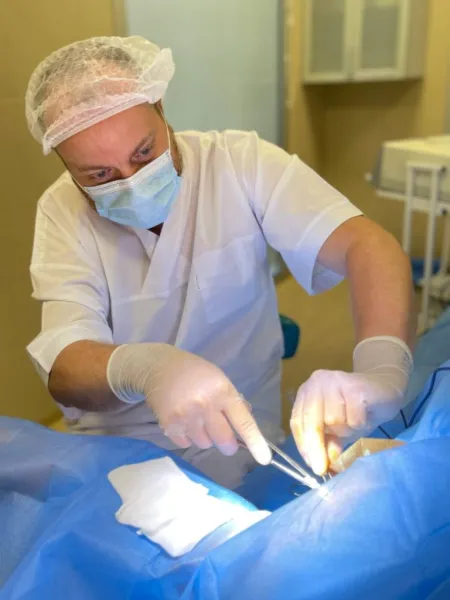
The incision of a felon is performed on an outpatient basis under local anesthesia and usually takes no more than 15–20 minutes. The steps of the procedure are:
1. Treating the surgical field with an antiseptic and administering anesthesia.
2. Carefully incising the skin in the area of the purulent focus.
3. Removing the purulent contents and rinsing the cavity with an antiseptic solution.
4. Installing drainage (if necessary) for the outflow of residual secretions.
5. Applying a sterile dressing.
After the operation, the patient can return home the same day, following the doctor's recommendations for wound care.
Postoperative care
- Regular wound treatment with antiseptics and changing dressings
- Maintaining hand hygiene and protecting the finger from injury
- Taking prescribed antibiotics (if recommended by the doctor)
- Follow-up with the surgeon until complete healing
Possible complications if untreated
Ignoring the symptoms of a felon can lead to severe consequences:
- Spread of infection to tendons, joints, or bones (tenosynovitis, arthritis, osteomyelitis)
- Formation of a hand phlegmon
- Sepsis
Timely consultation with a doctor and incision of the abscess can prevent these complications and quickly restore finger function.
💡 Incision of a felon is a quick and safe procedure that relieves pain, prevents complications, and allows for full recovery of finger health. At the first signs of purulent inflammation, do not delay visiting a surgeon.
A felon is an acute purulent inflammation of the tissues of a finger on the hand or foot, which develops as a result of infection penetrating through microtraumas, abrasions, or cuts. The condition is accompanied by pain, redness, swelling, and an increase in skin temperature at the affected site. Without timely treatment, a felon can quickly progress, spreading to tendons, joints, and bones, posing a risk of serious complications.
When is incision of a felon necessary?
While a felon can be treated conservatively in its early stages (with antibiotics, antiseptic dressings, physiotherapy), surgical incision is indicated when a purulent focus forms. Indications for surgery include:
- The appearance of severe pain that intensifies when pressed
- Presence of swelling and redness in the finger area
- Increased local temperature, a feeling of "pulsation"
- Accumulation of pus under the skin
- Lack of effect from conservative treatment within 1–2 days
How the procedure is performed
The incision of a felon is performed on an outpatient basis under local anesthesia and usually takes no more than 15–20 minutes. The steps of the procedure are:
1. Treating the surgical field with an antiseptic and administering anesthesia.
2. Carefully incising the skin in the area of the purulent focus.
3. Removing the purulent contents and rinsing the cavity with an antiseptic solution.
4. Installing drainage (if necessary) for the outflow of residual secretions.
5. Applying a sterile dressing.
After the operation, the patient can return home the same day, following the doctor's recommendations for wound care.
Postoperative care
- Regular wound treatment with antiseptics and changing dressings
- Maintaining hand hygiene and protecting the finger from injury
- Taking prescribed antibiotics (if recommended by the doctor)
- Follow-up with the surgeon until complete healing
Possible complications if untreated
Ignoring the symptoms of a felon can lead to severe consequences:
- Spread of infection to tendons, joints, or bones (tenosynovitis, arthritis, osteomyelitis)
- Formation of a hand phlegmon
- Sepsis
Timely consultation with a doctor and incision of the abscess can prevent these complications and quickly restore finger function.
💡 Incision of a felon is a quick and safe procedure that relieves pain, prevents complications, and allows for full recovery of finger health. At the first signs of purulent inflammation, do not delay visiting a surgeon.


