
Breast cancer marker (CA 15-3)
Breast cancer tumor marker (CA 15-3) — diagnosis and treatment monitoring of cancer
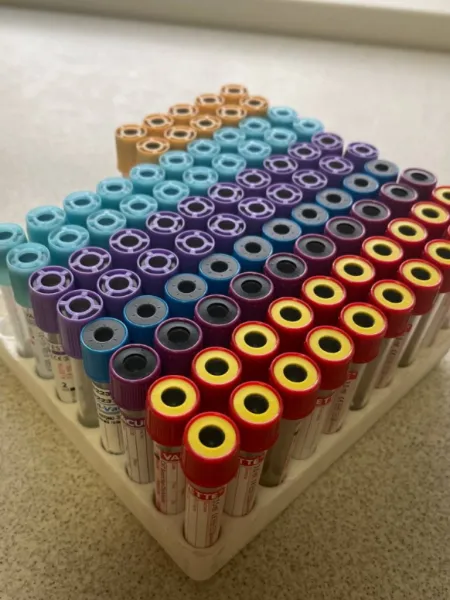
The tumor marker CA 15-3 (Cancer Antigen 15-3) is a specific substance produced by breast cells and can increase in the presence of a malignant process, especially in breast cancer. Determining its level in the blood is used as an additional method for diagnosis and monitoring treatment.
🔬 What the test shows
An increase in CA 15-3 levels is most commonly observed in breast cancer, especially in later stages or with metastases.
Moderate elevation can also occur in other conditions:
- Benign breast diseases (mastopathy, cyst);
- Inflammatory processes (mastitis, hepatitis);
- Liver cirrhosis, endometriosis, ovarian, lung, and pancreatic tumors.
Important: An elevated level alone does not confirm cancer but serves as a signal for more in-depth examination.
🎯 When the test is ordered
- When breast cancer is suspected.
- To assess the effectiveness of treatment (chemotherapy, surgery, hormone therapy).
- To monitor for recurrences after completing therapy.
- In combination with other tumor markers (e.g., CEA, CA 125) when metastases are suspected.
📈 Normal values
In healthy women, the CA 15-3 level usually does not exceed 25–30 U/mL. A slight increase is possible in benign conditions, but levels above 40 U/mL require further diagnostic investigation.
⚕️ Preparation for the test
- Blood is drawn in the morning on an empty stomach (at least 8 hours without food).
- Exclude fatty foods and alcohol for a day.
- Do not smoke for 2–3 hours before the test.
- If possible, temporarily discontinue medications affecting the liver or hormonal balance (in consultation with a doctor).
💡 Why it's important to conduct the test over time
A single result does not provide a complete picture. Only serial determination of CA 15-3 levels allows for the assessment of treatment effectiveness and timely detection of recurrence or disease progression.
🔬 What the test shows
An increase in CA 15-3 levels is most commonly observed in breast cancer, especially in later stages or with metastases.
Moderate elevation can also occur in other conditions:
- Benign breast diseases (mastopathy, cyst);
- Inflammatory processes (mastitis, hepatitis);
- Liver cirrhosis, endometriosis, ovarian, lung, and pancreatic tumors.
Important: An elevated level alone does not confirm cancer but serves as a signal for more in-depth examination.
🎯 When the test is ordered
- When breast cancer is suspected.
- To assess the effectiveness of treatment (chemotherapy, surgery, hormone therapy).
- To monitor for recurrences after completing therapy.
- In combination with other tumor markers (e.g., CEA, CA 125) when metastases are suspected.
📈 Normal values
In healthy women, the CA 15-3 level usually does not exceed 25–30 U/mL. A slight increase is possible in benign conditions, but levels above 40 U/mL require further diagnostic investigation.
⚕️ Preparation for the test
- Blood is drawn in the morning on an empty stomach (at least 8 hours without food).
- Exclude fatty foods and alcohol for a day.
- Do not smoke for 2–3 hours before the test.
- If possible, temporarily discontinue medications affecting the liver or hormonal balance (in consultation with a doctor).
💡 Why it's important to conduct the test over time
A single result does not provide a complete picture. Only serial determination of CA 15-3 levels allows for the assessment of treatment effectiveness and timely detection of recurrence or disease progression.


