
Advanced hemostasis tests
Advanced hemostasis tests at the "Genesis Dnipro" laboratory — an accurate assessment of the blood coagulation system.
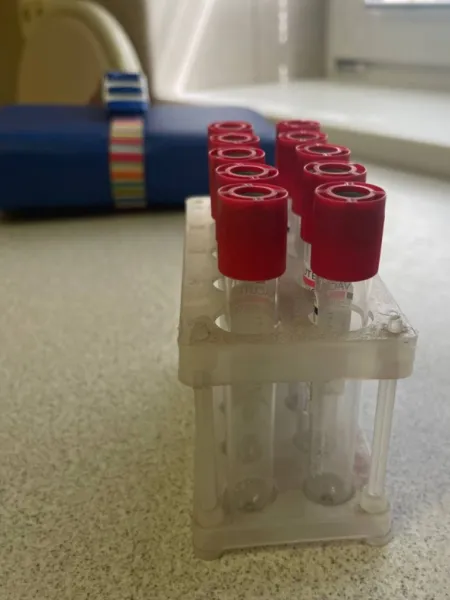
Fibrinolytic activity is the body's ability to break down formed fibrin clots. Retraction/degree of retraction refers to physical changes in the clot (acceleration/reduction in volume and density), which is also part of the stabilization and formation process of the clot. Antithrombin III (AT III) is a natural anticoagulant that inhibits the thrombotic process. Lupus Anticoagulant is an antibody that "prolongs" clotting time in vitro tests but is often associated with thrombotic risk in the body. D-dimer is a fibrin degradation product, a marker indicating that clots have formed and undergone partial destructive/fibrinolytic processes.
Tests related to the hemostatic system, that is, blood clotting and dissolution, thrombus and clot formation, help assess the balance between coagulation and anticoagulation, fibrinolysis. These tests together provide an understanding of the equilibrium: when coagulation is active, there may be a risk of thrombosis; when fibrinolysis is excessive or there are no anticoagulants, there may be a risk of bleeding or clot stabilization disorders.
They are used for the diagnosis and assessment of: thrombotic conditions (e.g., venous thrombosis, embolism, antiphospholipid antibody syndrome); coagulation disorders (AT III deficiency, excessive fibrinolysis, retraction problems); assessment of the risk of complications in surgeries, after injuries, in diseases affecting the liver, blood vessels, and immune system.
Tests related to the hemostatic system, that is, blood clotting and dissolution, thrombus and clot formation, help assess the balance between coagulation and anticoagulation, fibrinolysis. These tests together provide an understanding of the equilibrium: when coagulation is active, there may be a risk of thrombosis; when fibrinolysis is excessive or there are no anticoagulants, there may be a risk of bleeding or clot stabilization disorders.
They are used for the diagnosis and assessment of: thrombotic conditions (e.g., venous thrombosis, embolism, antiphospholipid antibody syndrome); coagulation disorders (AT III deficiency, excessive fibrinolysis, retraction problems); assessment of the risk of complications in surgeries, after injuries, in diseases affecting the liver, blood vessels, and immune system.


