
REMOVAL OF STONES FROM THE URETER
Ureteral stones, also known as ureterolithiasis, are stones that form in the kidneys and travel down into the ureters, which are the tubes that carry urine from the kidneys to the bladder. These stones can cause pain, block urine flow, and lead to other complications.
The removal of ureteral stones depends on their size, location, and the severity of symptoms. Common methods for removing ureteral stones include:
1. **Medication**: Small stones may pass on their own with the help of medications that relax the ureter, such as alpha-blockers, and pain relievers.
2. **Extracorporeal Shock Wave Lithotripsy (ESWL)**: This non-invasive procedure uses shock waves to break the stones into smaller pieces that can be passed more easily through the urinary tract.
3. **Ureteroscopy**: A thin, flexible scope is inserted through the urethra and bladder into the ureter to locate and remove the stone or break it into smaller pieces using a laser.
4. **Percutaneous Nephrolithotomy (PCNL)**: For larger stones, a small incision is made in the back to access the kidney directly and remove the stone.
5. **Surgery**: In rare cases, open surgery may be necessary to remove very large stones or when other methods are not effective.
The choice of treatment depends on various factors, including the stone's size, location, and the patient's overall health.
The removal of ureteral stones depends on their size, location, and the severity of symptoms. Common methods for removing ureteral stones include:
1. **Medication**: Small stones may pass on their own with the help of medications that relax the ureter, such as alpha-blockers, and pain relievers.
2. **Extracorporeal Shock Wave Lithotripsy (ESWL)**: This non-invasive procedure uses shock waves to break the stones into smaller pieces that can be passed more easily through the urinary tract.
3. **Ureteroscopy**: A thin, flexible scope is inserted through the urethra and bladder into the ureter to locate and remove the stone or break it into smaller pieces using a laser.
4. **Percutaneous Nephrolithotomy (PCNL)**: For larger stones, a small incision is made in the back to access the kidney directly and remove the stone.
5. **Surgery**: In rare cases, open surgery may be necessary to remove very large stones or when other methods are not effective.
The choice of treatment depends on various factors, including the stone's size, location, and the patient's overall health.
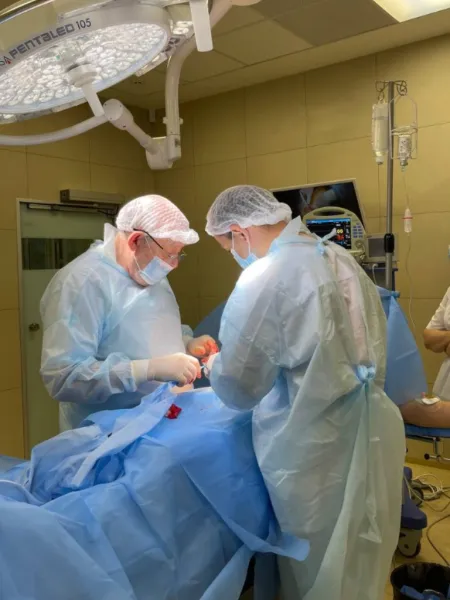
Removal of Ureteral Stones: Modern Treatment Without Pain and Incisions
Stones (calculi) in the ureter are dense formations made of salts that disrupt the normal flow of urine and cause severe pain (renal colic). This situation requires timely treatment, as prolonged obstruction can lead to inflammation, kidney damage, or the development of hydronephrosis.
Symptoms of Ureteral Stones
- Sudden sharp pain in the lower back or side, radiating to the groin;
- Frequent and painful urges to urinate;
- Blood in the urine;
- Nausea, vomiting, chills;
- Feeling of incomplete bladder emptying.
With such symptoms, it is important to see a urologist as soon as possible, especially if the pain persists and the urine becomes cloudy or bloody.
Diagnosis
At the "Genesis Dnipro" clinic, the diagnosis of stones is conducted quickly and accurately:
- Ultrasound of the kidneys and ureters for initial detection of the stone;
- Computed Tomography (CT) to determine the exact size and location;
- General urine and blood tests to assess inflammation and kidney function;
- Overview urography to show the degree of urine flow obstruction.
After diagnosis, the doctor selects the optimal treatment strategy—conservative or surgical.
Modern Methods of Ureteral Stone Removal
🔹 1. Ureterolithotripsy (Endoscopic Removal)
This is the most common and gentle method. A thin endoscope (ureteroscope) is inserted through the urethra and bladder, allowing the doctor to visually see the stone. Then, laser or ultrasound fragmentation is performed, after which the fragments are extracted or passed naturally.
Advantages:
- No incisions or stitches;
- Performed under anesthesia;
- Complete stone removal in one procedure;
- Short recovery period (1–2 days).
🔹 2. Laparoscopic Removal
Used for large or stuck stones that cannot be removed endoscopically. Through several small punctures, the doctor carefully extracts the stone and restores ureteral patency. The procedure is performed under general anesthesia, with recovery taking 3–5 days.
🔹 3. Extracorporeal Shock Wave Lithotripsy
This is a non-surgical method where the stone is fragmented externally using shock waves. Suitable for small stones (up to 1 cm) that do not require invasive intervention.
Postoperative Period
After stone removal, the patient remains under observation for 1–2 days. The doctor may place a temporary stent (thin tube) to restore urine flow, which is removed after 5–10 days.
Recommendations:
- Drink plenty of fluids to flush the urinary tract;
- Limit salt and protein in the diet;
- Avoid hypothermia;
- Follow-up examination in 2–3 weeks.
Advantages of Treatment at "Genesis Dnipro" Clinic
- Modern endoscopic and laser equipment;
- Experienced urologist-surgeons;
- Safe anesthesia and comfortable conditions;
- Minimal trauma and quick recovery;
- Complete confidentiality and individual approach.
Why It Is Important Not to Delay Treatment
Ureteral stones do not disappear on their own. Prolonged obstruction leads to inflammation, impaired kidney function, and can cause chronic kidney failure. Timely removal is a guarantee of preserving the health of the urinary system.
Care and Precision
At the "Genesis Dnipro" clinic, all procedures are performed according to international standards, using modern technologies and with maximum attention to the patient. We do everything to ensure that treatment is painless, without fear, and with a quick return to normal life.
Stones (calculi) in the ureter are dense formations made of salts that disrupt the normal flow of urine and cause severe pain (renal colic). This situation requires timely treatment, as prolonged obstruction can lead to inflammation, kidney damage, or the development of hydronephrosis.
Symptoms of Ureteral Stones
- Sudden sharp pain in the lower back or side, radiating to the groin;
- Frequent and painful urges to urinate;
- Blood in the urine;
- Nausea, vomiting, chills;
- Feeling of incomplete bladder emptying.
With such symptoms, it is important to see a urologist as soon as possible, especially if the pain persists and the urine becomes cloudy or bloody.
Diagnosis
At the "Genesis Dnipro" clinic, the diagnosis of stones is conducted quickly and accurately:
- Ultrasound of the kidneys and ureters for initial detection of the stone;
- Computed Tomography (CT) to determine the exact size and location;
- General urine and blood tests to assess inflammation and kidney function;
- Overview urography to show the degree of urine flow obstruction.
After diagnosis, the doctor selects the optimal treatment strategy—conservative or surgical.
Modern Methods of Ureteral Stone Removal
🔹 1. Ureterolithotripsy (Endoscopic Removal)
This is the most common and gentle method. A thin endoscope (ureteroscope) is inserted through the urethra and bladder, allowing the doctor to visually see the stone. Then, laser or ultrasound fragmentation is performed, after which the fragments are extracted or passed naturally.
Advantages:
- No incisions or stitches;
- Performed under anesthesia;
- Complete stone removal in one procedure;
- Short recovery period (1–2 days).
🔹 2. Laparoscopic Removal
Used for large or stuck stones that cannot be removed endoscopically. Through several small punctures, the doctor carefully extracts the stone and restores ureteral patency. The procedure is performed under general anesthesia, with recovery taking 3–5 days.
🔹 3. Extracorporeal Shock Wave Lithotripsy
This is a non-surgical method where the stone is fragmented externally using shock waves. Suitable for small stones (up to 1 cm) that do not require invasive intervention.
Postoperative Period
After stone removal, the patient remains under observation for 1–2 days. The doctor may place a temporary stent (thin tube) to restore urine flow, which is removed after 5–10 days.
Recommendations:
- Drink plenty of fluids to flush the urinary tract;
- Limit salt and protein in the diet;
- Avoid hypothermia;
- Follow-up examination in 2–3 weeks.
Advantages of Treatment at "Genesis Dnipro" Clinic
- Modern endoscopic and laser equipment;
- Experienced urologist-surgeons;
- Safe anesthesia and comfortable conditions;
- Minimal trauma and quick recovery;
- Complete confidentiality and individual approach.
Why It Is Important Not to Delay Treatment
Ureteral stones do not disappear on their own. Prolonged obstruction leads to inflammation, impaired kidney function, and can cause chronic kidney failure. Timely removal is a guarantee of preserving the health of the urinary system.
Care and Precision
At the "Genesis Dnipro" clinic, all procedures are performed according to international standards, using modern technologies and with maximum attention to the patient. We do everything to ensure that treatment is painless, without fear, and with a quick return to normal life.


