

In Brief
What it is. Sotatercept (brand name Winrevair) is a trap for signalling proteins, injected subcutaneously once every three weeks. Approved by the FDA in March 2024.
Why it matters. Every earlier drug in this disease widens the vessel. This one acts on the growth of the vessel wall.
Who it is for. Adults with pulmonary arterial hypertension — in addition to background therapy, not instead of it.
What Happens in the Pulmonary Vessels
Pulmonary arterial hypertension is not high blood pressure in the familiar sense. It concerns the vessels carrying blood from the heart to the lungs.
Cells in the walls of those arteries begin to multiply excessively. The wall thickens, the lumen narrows, resistance to flow rises. The right ventricle must push blood through ever narrower vessels — and gradually wears out.
Clinically this is breathlessness on exertion, fatigue and fainting. The disease is rare, but untreated the outlook is poor.
Why the Earlier Drugs Did Not Solve the Problem
The three classes on which treatment rested for decades — prostacyclins, endothelin receptor antagonists and phosphodiesterase-5 inhibitors — all essentially do one thing: widen the vessel by relieving spasm.
This works and prolongs life. But the wall keeps thickening regardless of whether the vessel is widened. Figuratively: the pipe furs up from inside while we adjust its bore from outside.
What Is Actually Broken
Two opposing signals meet in the cells of the vessel wall:
| Signal | What it does | What happens in the disease |
|---|---|---|
| Through the BMPR2 receptor | Restrains cell division | Weakened |
| Through activins and related proteins | Drives division | Amplified |
The balance tips toward growth, and the wall thickens. This is precisely why mutations in the BMPR2 gene are found in a substantial share of patients with the hereditary form.
Sotatercept is built as a fragment of the receptor fused to part of an antibody. It works as a trap: it captures surplus activins from the blood before they reach the cells. The advantage returns to the restraining signal.
What the Trials Showed
▸ STELLAR (NEJM, 2023) — 323 patients already on stable background therapy. Six-minute walk distance improved by 40.8 m more than on placebo (95% CI 27.5–54.1; p<0.001). Eight of nine secondary endpoints also favoured the drug [1].
▸ ZENITH (NEJM, 2025) — 172 high-risk patients on the maximum tolerated background therapy. Here events were counted rather than metres [2]:
| Event | Sotatercept | Placebo |
|---|---|---|
| Composite (death, lung transplantation or hospitalisation) | 17.4% | 54.7% |
| Death from any cause | 8.1% | 15.1% |
| Lung transplantation | 1.2% | 7.0% |
| Hospitalisation for worsening | 9.3% | 50.0% |
The hazard ratio for the composite was 0.24 (95% CI 0.13–0.43; p<0.001).
The trial was stopped early. The interim analysis showed an advantage so clear that continuing to give placebo became unethical. That is a powerful argument — and simultaneously the reason there is less long-term data than one would like.
How It Is Used
| Parameter | Detail |
|---|---|
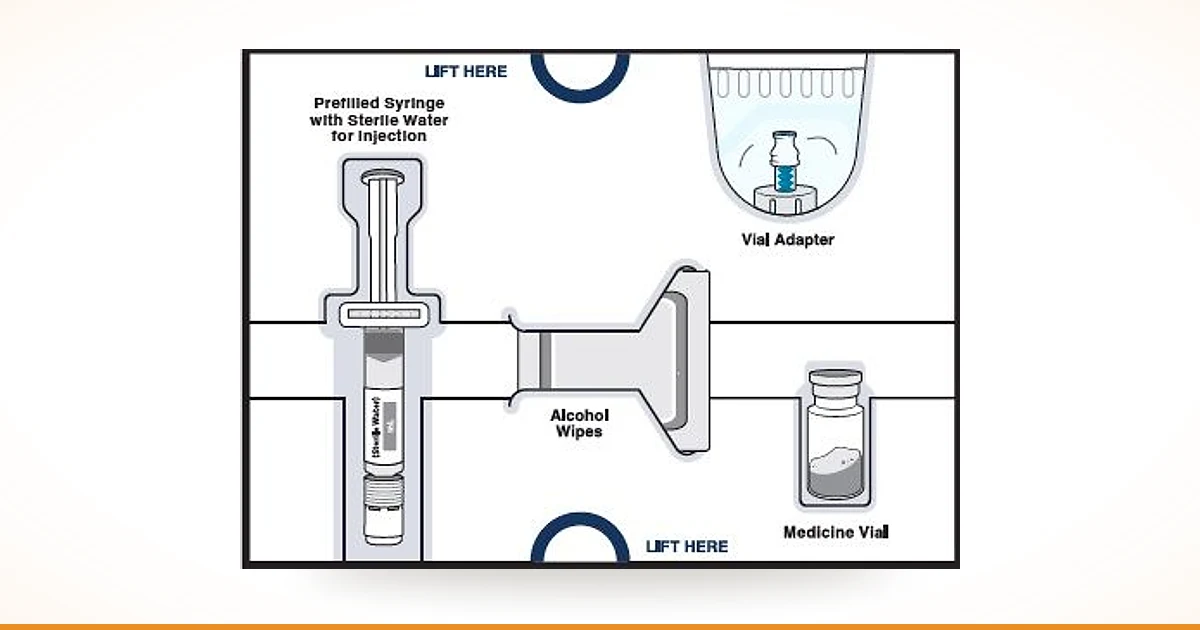
| Route | Subcutaneous injection |
| Frequency | Once every three weeks |
| Role in the regimen | Added to background therapy |
| Monitoring | Haemoglobin and platelets before every dose during titration |
| Discuss in advance | Fertility |
The Cost of the Effect
▸ Nosebleeds and telangiectasia — dilated small vessels on the skin and mucous membranes; the most characteristic events.
▸ Rising haemoglobin: the blood thickens more than it should, so levels are monitored regularly.
▸ Falling platelets — the same blood counts cover this.
▸ Effects on fertility: drugs of this class may affect reproductive function, and that conversation belongs before treatment rather than after.
What Cannot Be Claimed Yet
▸ That it replaces background therapy — in every trial it was added to it.
▸ That the effect holds for years: ZENITH was stopped early, and long-term observation is still accumulating.
▸ That it suits other forms of pulmonary hypertension — the indication covers the arterial form, not hypertension secondary to lung disease or thromboembolism.
▸ How it ranks against other drugs in strength — no head-to-head trials have been run.
Who It Is Not For
▸ Patients with pulmonary hypertension of another origin — the mechanism does not address them.
▸ Anyone with an already high haemoglobin or low platelets — decided case by case and requiring monitoring.
▸ Anyone planning pregnancy without discussing the fertility question with their doctor.
▸ As a reason to stop background therapy that is working.
Bottom Line
▸ The first mechanism aimed at growth of the vessel wall rather than its spasm.
▸ An activin trap returns the advantage to the restraining BMPR2 signal.
▸ STELLAR: 40.8 m further on the walk test than placebo in patients on stable therapy.
▸ ZENITH: events in 17.4% versus 54.7%, hospitalisations 9.3% versus 50.0%; the trial was stopped early for efficacy.
▸ The cost — nosebleeds, telangiectasia, rising haemoglobin and falling platelets, all under regular monitoring.
Treatment can be discussed at a consultation; the drug can be ordered here.
References
1. Hoeper MM, et al. Phase 3 Trial of Sotatercept for Treatment of Pulmonary Arterial Hypertension. N Engl J Med. 2023;388(16):1478–1490. PMID 36877098
2. Humbert M, et al. Sotatercept in Patients with Pulmonary Arterial Hypertension at High Risk for Death. N Engl J Med. 2025;392(20):1987–2000. PMID 40167274
3. WINREVAIR (sotatercept-csrk) — US Prescribing Information, Merck.


