

The Most Common Endocrine Disorder in Women
Polycystic ovary syndrome (PCOS) affects 8-13% of reproductive-age women, making it the most prevalent endocrine disorder in women (Bozdag et al., Human Reproduction Update, 2016). Up to 70% of cases remain undiagnosed. The average time from symptom onset to diagnosis exceeds 2 years, with patients seeing an average of 3 physicians before receiving the correct diagnosis.
Rotterdam Criteria: Establishing the Diagnosis
PCOS is diagnosed when at least 2 of 3 criteria are present (Rotterdam Consensus, 2003; thresholds refined in the 2023 international guideline [PMID 37580314]):
1. Oligo-ovulation or anovulation — irregular cycles (in adults: cycles <21 or >35 days, fewer than 8 cycles per year, or any cycle >90 days) or amenorrhea
2. Clinical and/or biochemical hyperandrogenism — acne, hirsutism, alopecia, elevated free testosterone or DHEA-S
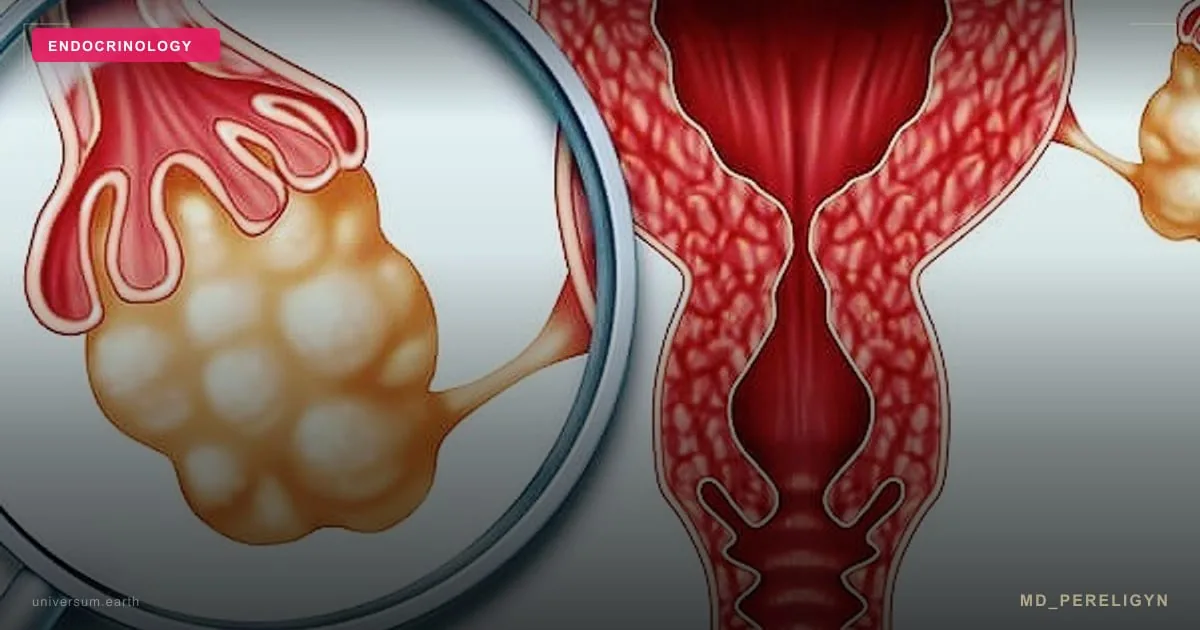
3. Polycystic ovarian morphology on ultrasound — 20 or more follicles measuring 2-9 mm in at least one ovary (transvaginal, transducer ≥8 MHz) and/or ovarian volume ≥10 mL; in adults, elevated AMH can be used instead of ultrasound, while in adolescents neither ultrasound nor AMH is used for diagnosis
Important: other causes of hyperandrogenism must be excluded — congenital adrenal hyperplasia (17-OH progesterone), prolactinoma (prolactin), hypothyroidism (TSH); when clinical features suggest them, Cushing syndrome (cortisol) and androgen-secreting tumours.
Insulin Resistance: A Key Mechanism, but Not the Only One
Insulin resistance is present in 70-80% of women with PCOS (both obese and lean). The mechanism: excess insulin stimulates ovarian theca cells to overproduce androgens (testosterone, androstenedione) and reduces SHBG, increasing bioavailable free testosterone.
How glucose metabolism is assessed in PCOS:
- 75 g OGTT with glucose at 0 and 120 minutes — the most accurate test; recommended when risk is higher (excess weight, prior gestational diabetes, family history of diabetes)
- Fasting glucose or HbA1c — acceptable alternatives
- Fasting insulin and HOMA-IR — not recommended by the 2023 guideline in routine practice: results depend on the assay and treatment decisions are not based on them [PMID 37580314]
| Marker | What the 2023 guideline says |
|---|---|
| 75 g OGTT (glucose 0 and 120 min) | most accurate test; at diagnosis and every 1-3 years |
| Fasting insulin, HOMA-IR | not recommended in routine practice: cut-offs are not standardised |
| AMH | in adults, an alternative to ultrasound; cut-off is assay-specific, no single number |
Anti-Mullerian Hormone (AMH): A PCOS Biomarker
AMH is produced by granulosa cells of preantral and small antral follicles. In PCOS, AMH is usually elevated 2-3 fold due to the large number of immature follicles. Dewailly et al. (Human Reproduction Update, 2014) proposed AMH as an additional diagnostic criterion. The 2023 guideline accepts AMH in adults as an alternative to ultrasound for ovarian morphology, but not as a stand-alone test: there is no single cut-off, as it depends on the laboratory assay. AMH is not used for diagnosis in adolescents [PMID 37580314].
Why Birth Control Alone Is Not Enough
Combined oral contraceptives (COCs) are the first-line medical therapy for irregular cycles and hyperandrogenism in adults under the 2023 guideline [PMID 37580314]. They suppress ovarian androgens, regulate cycles, improve acne and hirsutism, and protect the endometrium.
However, COCs do not address insulin resistance or lower metabolic risk, so glucose status, weight, blood pressure, and lipids are assessed separately, and metformin can be added to a COC when needed. The guideline does not favour any specific COC formulation and advises the lowest effective oestrogen dose. After stopping COCs, the symptoms they controlled usually return: PCOS is a chronic condition.
Comprehensive PCOS Treatment Protocol
1. Inositol (Myo-inositol + D-chiro-inositol)
Myo-inositol (MI) is a second messenger in insulin signaling. MI deficiency is thought to contribute to insulin resistance in PCOS. However, the 2023 guideline classifies inositol as an experimental therapy. The meta-analysis prepared for the guideline (Fitz et al., JCEM, 2024; 30 trials) found benefit of myo- or D-chiro-inositol for some metabolic measures and possible benefit of D-chiro-inositol for ovulation; for other outcomes an effect was not shown, and no dose or ratio (including 40:1) has been shown to be superior [PMID 38163998]. A decision to try inositol is made with the doctor, with the limited evidence in mind.
2. Metformin
An insulin sensitizer that reduces hepatic glucose production. Cochrane meta-analysis (Morley et al., 2017): metformin improves ovulation, reduces androgens, and decreases weight in PCOS. Starting dose: 500 mg, titrated to 1,500-2,000 mg/day.
3. Spironolactone
An aldosterone antagonist with anti-androgenic activity. Blocks androgen receptors and inhibits 5-alpha reductase. Dosage: 50-200 mg/day. Effects on acne and hirsutism appear after 3-6 months. Contraception is mandatory (teratogenic risk).
4. Lifestyle Management
Nutrition: the 2023 guideline does not favour any single diet: any balanced eating pattern that can be sustained long term works, with a moderate calorie deficit when weight is excessive [PMID 37580314]. A Mediterranean or low-glycaemic pattern is an acceptable option, not a requirement.
Exercise: 150 minutes moderate aerobic activity plus 2 resistance training sessions per week. In women with excess weight, a 5-10% weight loss yields clinically meaningful improvement in reproductive and metabolic features [PMID 37580314].
Supplements: according to the 2023 guideline, evidence for vitamin D, omega-3, berberine, N-acetylcysteine, and other supplements in PCOS is insufficient, so no dosing schemes are given here [PMID 37580314]. Vitamin D deficiency found on testing is corrected under general rules; tell your doctor about any supplement, as some interact with medicines.
Frequently Asked Questions
Can you get pregnant with PCOS?
Yes. In women with excess weight, weight loss alone often restores ovulation. The first-line drug for ovulation induction is letrozole (in a 2014 NEJM randomised trial it gave more live births than clomiphene); metformin is used when indicated [PMID 37580314].
Is PCOS permanent?
PCOS is a chronic condition with genetic predisposition. However, symptoms can be controlled and minimized with treatment matched to the dominant features.
Should PCOS be treated if pregnancy is not planned?
Yes, at least with monitoring. PCOS increases the risk of type 2 diabetes (about threefold: RR 3.00 in a meta-analysis of cohort studies [PMID 32995872]), cardiovascular disease, endometrial hyperplasia and cancer, depression, and metabolic syndrome.
How does inositol compare with metformin?
Inositol causes fewer GI side effects and needs no prescription, but its evidence base is weaker: the 2023 guideline considers it experimental. In the meta-analysis metformin reduced hirsutism and waist-hip ratio more; for reproductive outcomes there is likely no difference [PMID 38163998]. A benefit of combining both has not been shown.
This article is for educational purposes only and does not constitute medical advice. Always consult a qualified healthcare professional before starting any treatment.
Rotterdam Phenotypes: Four Subgroups Under One Diagnosis
The Rotterdam consensus defines PCOS by any two of three criteria, which mathematically yields four phenotypes. The 2023 International Evidence-Based Guideline endorses phenotype-specific risk stratification because metabolic burden differs substantially across subgroups.
Phenotype A (classic/full PCOS) combines hyperandrogenism, oligo-anovulation, and polycystic ovarian morphology. This is the most metabolically severe form. Prevalence of insulin resistance and metabolic syndrome is highest here, with HOMA-IR values typically above 3.5 and free androgen index elevations of 2-3 fold over controls [PMID 24108622].
Phenotype B has hyperandrogenism and oligo-anovulation without polycystic ovarian morphology on ultrasound. Metabolic risk approaches phenotype A. Patients in this group are frequently misdiagnosed as "not PCOS" because of normal-appearing ovaries on imaging, even though insulin resistance, dyslipidaemia, and androgen excess are fully present.
Phenotype C (ovulatory PCOS) combines hyperandrogenism with polycystic ovarian morphology but preserved regular ovulation. Metabolic risk is intermediate. Cycles are present, fertility may be normal, but acne, hirsutism, and androgenic alopecia drive clinical presentation. Spironolactone and combined oral contraceptives remain first-line; metformin is added for metabolic features found on OGTT, fasting glucose, or HbA1c (the 2023 guideline does not recommend fasting insulin or HOMA-IR cut-offs in routine practice), while inositol remains experimental [PMID 38163998].
Phenotype D (non-hyperandrogenic PCOS) combines oligo-anovulation with polycystic ovarian morphology but without clinical or biochemical hyperandrogenism. Metabolic risk is lowest and closest to controls. Some authors question whether phenotype D represents a distinct disorder from functional hypothalamic anovulation; differentiation requires ruling out energy deficit, hyperprolactinaemia, and thyroid dysfunction [PMID 33729479].
Clinical implication: insulin-targeted therapy (metformin, GLP-1 agonists) yields the largest absolute benefit in phenotypes A and B. Androgen-targeted therapy (spironolactone, combined oral contraceptives, finasteride) gives proportionally larger benefit in phenotype C. Phenotype D often responds to weight restoration and behavioural changes alone. Documenting the phenotype at diagnosis allows the patient and clinician to focus the therapeutic protocol rather than apply a generic PCOS template, and aligns laboratory follow-up with the dominant pathology — glycaemic status (OGTT, fasting glucose, or HbA1c) every 1-3 years for phenotypes A-B, free testosterone and SHBG for phenotype C, and cycle tracking with bone-density review for phenotype D when amenorrhoea persists.
Letrozole Protocol for Ovulation Induction
Letrozole, an aromatase inhibitor, replaced clomiphene citrate as the first-line ovulation induction agent in PCOS based on the 2014 NIH Pregnancy in Polycystic Ovary Syndrome II (PPCOS II) trial, which demonstrated higher live-birth rates (27.5% vs 19.1%) and higher cumulative ovulation rates with letrozole. The 2023 international guideline now lists letrozole as recommended first-line and clomiphene as alternative.
Standard protocol. Letrozole 2.5 mg orally once daily on cycle days 3-7 (five days). If no ovulation occurs by cycle day 21 (confirmed by mid-luteal progesterone below 3 ng/mL), the next cycle dose increases to 5 mg daily. Maximum dose is 7.5 mg daily; doses above 7.5 mg do not improve ovulation rates and increase risk of multifollicular development. Approximately 75-80% of women with PCOS ovulate within three cycles at appropriate dose.
Monitoring. Mid-luteal progesterone (cycle day 21 in a 28-day cycle, or seven days post-presumed ovulation) confirms response. Transvaginal ultrasound on cycle day 12-14 evaluates dominant follicle size and endometrial thickness; cancellation is recommended if more than three follicles measure ≥16 mm to limit multiple pregnancy risk. Multiple pregnancy rate with letrozole is approximately 3-5%, lower than clomiphene's 7-9%.
Duration and stopping rules. Six ovulatory cycles is the standard ceiling. If pregnancy has not occurred after six ovulatory cycles, transition to gonadotrophin protocols, laparoscopic ovarian drilling, or in vitro fertilisation is indicated. Continuing letrozole beyond six ovulatory cycles without conception does not improve cumulative pregnancy rates.
Contraindications and safety. Letrozole is contraindicated in pregnancy. Pre-treatment requires negative pregnancy test on cycle day 1-3. Early concerns about teratogenicity from a 2005 abstract were not confirmed in subsequent cohort and registry studies; the rate of major malformations after letrozole-conceived pregnancies is comparable to spontaneous conception [PMID 18950759]. Hot flashes, fatigue, and headache are the most common side effects and resolve after the five-day dosing window.
Endometrial Protection and Surveillance
Chronic anovulation produces unopposed oestrogen exposure of the endometrium. Without periodic progestin opposition, the endometrium undergoes proliferation, then complex hyperplasia, then in some patients endometrial carcinoma. Women with PCOS have a 2.7-fold increased risk of endometrial carcinoma compared with the general population [PMID 23335732].
Bleed-interval threshold. The clinical safety threshold is at least four spontaneous or induced withdrawal bleeds per year. Patients with fewer than four cycles per year require active endometrial protection regardless of fertility intent.
Progestin regimens (when contraception is not desired). Cyclic micronised progesterone 200 mg orally at bedtime for 12-14 days every 1-3 months induces a predictable withdrawal bleed. Medroxyprogesterone acetate 10 mg daily for 10-14 days is an alternative. The levonorgestrel-releasing intrauterine system (52 mg, 8-year duration) provides continuous endometrial protection and is the preferred long-term option for patients with abnormal uterine bleeding plus anovulatory PCOS [PMID 34325430].
Combined contraceptive option. When contraception is also desired, combined oral contraceptives, the contraceptive ring, or the contraceptive patch all provide endometrial protection. The 2023 guideline notes no specific formulation is superior for PCOS endometrial protection; formulation selection is driven by androgenic profile (drospirenone or cyproterone acetate preferred when hirsutism is dominant) and venous thromboembolism risk.
Surveillance. Transvaginal ultrasound measurement of endometrial thickness is the first-line evaluation when abnormal bleeding occurs. In a premenopausal patient with PCOS, a persistently thickened or heterogeneous endometrium warrants endometrial biopsy; no PCOS-specific thickness cut-off is set by the 2023 guideline [PMID 37580314]. Endometrial biopsy is also indicated for any intermenstrual bleeding pattern persisting beyond three months, any bleed after six months of amenorrhoea, or any abnormal cytology [PMID 32621590]. Routine annual screening of asymptomatic PCOS patients without bleeding abnormalities is not recommended.
Risk modifiers. Obesity, type 2 diabetes, and tamoxifen exposure compound endometrial risk and should lower the threshold for biopsy. In patients with excess weight, a 5-10% weight loss yields clinically meaningful improvement, can restore ovulatory cycles, and is itself protective. Documentation of bleed intervals — patient cycle calendars, withdrawal-bleed logs after progestin courses — should appear in the chart at each annual visit. A bleed-interval longer than three months in any premenopausal PCOS patient is a trigger for immediate progestin courses or transition to a long-acting endometrial-protective method.
Adolescent PCOS: Why Adult Criteria Misclassify
Adolescent PCOS diagnosis is the most frequent source of overdiagnosis in endocrine practice. The Rotterdam ultrasound criterion (originally 12+ follicles 2-9 mm, now 20+ per ovary under the 2023 guideline; ovarian volume ≥10 mL) overlaps almost completely with normal post-menarchal ovarian appearance, where multifollicular ovaries are physiological for 2-3 years after first menses.
The 2017 international adolescent PCOS criteria, reaffirmed in 2023, require both persistent oligo-anovulation and clinical or biochemical hyperandrogenism, and explicitly exclude ultrasound from the diagnostic criteria within eight years of menarche [PMID 17609215].
Anovulation criterion in adolescents. Cycle irregularity during the first post-menarchal year is physiological and does not establish anovulation. Persistent oligo-anovulation is defined as: cycles less than 21 days or more than 45 days in the first year post-menarche; cycles less than 21 days or more than 35 days, or fewer than 8 cycles per year, in years 1-3 post-menarche; cycles less than 21 days or more than 35 days from year 3 onward.
Hyperandrogenism in adolescents. Persistent acne unresponsive to topical therapy, moderate-severe hirsutism (modified Ferriman-Gallwey ≥6), or elevated free testosterone above adolescent reference ranges (laboratory-specific) is required. Mild comedonal acne alone is insufficient; mild hirsutism alone is insufficient.
The "at-risk" category. Adolescents with one but not both criteria, or those within the first two years post-menarche, should be classified "at risk for PCOS" rather than diagnosed. These patients warrant interval reassessment at 2-3 years; many will not meet diagnostic criteria at follow-up because cycles regularise spontaneously.
Implication for treatment. Combined oral contraceptives and metformin can be offered for symptom management in at-risk adolescents without committing to a permanent PCOS diagnosis. Documenting "at risk" rather than "PCOS" preserves diagnostic accuracy when reassessment occurs after gynaecological maturity, typically at age 18-20.
Anti-Mullerian hormone in adolescents. AMH is elevated in adolescent PCOS as in adult PCOS, but the reference range is not standardised across paediatric assays and overlaps with normal adolescent values. Current consensus does not endorse AMH as a stand-alone diagnostic criterion in adolescents [PMID 25028408]. AMH is most useful for confirming ovarian reserve in patients pursuing fertility planning, not for case-finding in symptomatic teenagers.


