

In brief
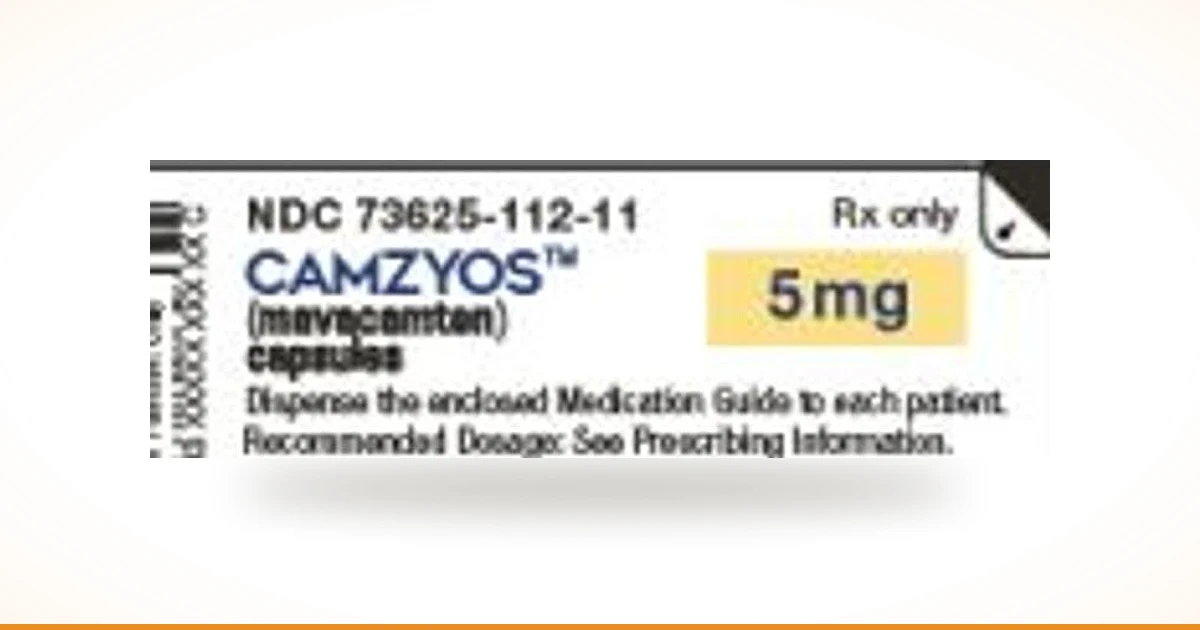
What it is. Mavacamten (brand name Camzyos, Bristol Myers Squibb) is the first-in-class cardiac myosin inhibitor, taken once daily.
What for. Symptomatic obstructive hypertrophic cardiomyopathy — breathlessness, chest pain and fainting on exertion.
Why it matters. The first drug to intervene in the molecular mechanics of contraction rather than easing the heart's working conditions.
What happens in this disease
Hypertrophic cardiomyopathy is a genetically determined thickening of the heart muscle, most often the interventricular septum. The key misconception: the heart here is not weak but excessively strong.
At molecular level, contraction depends on cross-bridges: myosin heads grab actin filaments and pull. In this disease the proportion of myosin ready to engage is increased — the muscle contracts excessively and relaxes poorly.
Then mechanics take over: in systole the thickened septum together with the anterior mitral leaflet blocks the outflow of blood into the aorta. The resulting outflow tract obstruction produces breathlessness, chest pain, dizziness and syncope.
What was available before, and what changed
| Approach | What it does | Limitation |
|---|---|---|
| Beta blockers | Lower rate and indirectly force of contraction | Do not address the molecular cause; effect often incomplete |
| Verapamil, disopyramide | Affect contractility and filling | Tolerability, limited effect |
| Septal myectomy (surgery) | Removes part of the thickened septum | Surgery, requires an experienced centre |
| Alcohol septal ablation | Induces a controlled infarct of septal tissue | Invasive, risk of conduction block |
| Mavacamten | Reduces the number of active actin-myosin bridges | Requires ejection fraction monitoring |
The fundamental difference: everything before either eased conditions or removed excess tissue. Mavacamten acts for the first time on the mechanism of excessive contraction itself.
What the trial showed
▸ EXPLORER-HCM (Lancet, 2020) — a phase 3 trial in patients with the symptomatic obstructive form. Mavacamten improved the composite endpoint — functional class and exercise capacity — significantly more often than placebo [1].
An integrated analysis of later data confirms the effect in monotherapy [2].
Dosing and monitoring
Here benefit and principal risk are the same action at different doses. The drug reduces contractility: in the right measure that is treatment, in excess it is heart failure.
| Stage | What happens |
|---|---|
| Before starting | Echocardiography: ejection fraction, outflow tract gradient |
| Start | Usually 5 mg daily |
| Titration | Dose adjusted according to echocardiography and gradient |
| Maintenance | Echocardiography every 12 weeks |
| If ejection fraction falls below threshold | Treatment interrupted |
The REMS programme. In the US the drug is dispensed only within a restricted-access scheme: prescriber, pharmacy and patient are enrolled and dispensing is tied to a confirmed echocardiography schedule. The logic is straightforward — without monitoring the drug is unsafe, so monitoring is built into the supply chain.
Interactions and limitations
▸ Metabolism runs through CYP2C19 and CYP3A4 — combination with strong inhibitors or inducers requires dose adjustment or is prohibited;
▸ pregnancy is a contraindication; women of childbearing potential need reliable contraception;
▸ heart failure with reduced ejection fraction — the drug is not prescribed;
▸ intercurrent illness (infection, tachyarrhythmia) can lower ejection fraction — therapy is reassessed at such times.
Aficamten: the next generation
Aficamten (Myqorzo, approved December 2025) works on the same principle but with different pharmacokinetics: a shorter half-life and faster attainment of steady state.
| Mavacamten | Aficamten | |
|---|---|---|
| Class | Cardiac myosin inhibitor | Cardiac myosin inhibitor |
| Half-life | Long | Shorter |
| Titration | Slower, less frequent steps | Faster and more flexible |
| Reversibility if over-suppressed | Slower | Faster |
| Evidence | EXPLORER-HCM and subsequent data | SEQUOIA-HCM [3] |
No head-to-head trials exist — the cardiologist chooses according to the clinical situation, availability and convenience of monitoring.
What a patient should understand
▸ This is not a general "heart tablet". The indication is narrow: symptomatic obstructive hypertrophic cardiomyopathy confirmed on echocardiography.
▸ Echocardiography is part of the treatment, not a formality. The drug cannot be used without it.
▸ The effect develops gradually and is judged by exercise tolerance and gradient, not by an immediate sense of relief.
▸ Stopping returns the baseline state — the drug manages the disease rather than curing its genetic cause.
The diagnosis and management can be discussed at a consultation; the product can be ordered here.
References
1. Olivotto I, et al. Mavacamten for treatment of symptomatic obstructive hypertrophic cardiomyopathy (EXPLORER-HCM): a randomised, double-blind, placebo-controlled, phase 3 trial. Lancet. 2020;396(10253):759–769. PMID 32871100
2. Olivotto I, et al. Mavacamten monotherapy in obstructive hypertrophic cardiomyopathy: an integrated analysis of phase 3 data. Am Heart J. 2026. PMID 42636950
3. Maron MS, et al. Aficamten for symptomatic obstructive hypertrophic cardiomyopathy (SEQUOIA-HCM). N Engl J Med. 2024;390(20):1849–1861. PMID 38739079
4. CAMZYOS (mavacamten) US Prescribing Information, Bristol Myers Squibb.


