

Key points
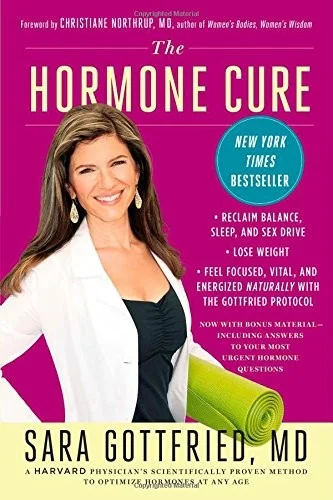
Sara Gottfried is a graduate of Harvard Medical School, a board-certified gynaecologist and a faculty member at Thomas Jefferson University; her book "The Hormone Cure" (Scribner, 2013) was one of the first to systematically combine mainstream endocrinology, laboratory diagnostics and lifestyle interventions for women's health — here are its main ideas.
| Idea of the book | How it helps a person | What human studies showed |
|---|---|---|
| Cortisol is the "first domino" of the hormonal cascade | with "hormonal imbalance", start not with hormones but with cortisol, sleep, circadian rhythm and stress | the clinically observed reduction of testosterone and progesterone in chronic hypercortisolism is reproducibly confirmed (Whirledge S et al., Minerva Endocrinol 2010) |
| The thyroid is assessed not by TSH alone | an extended panel helps detect autoimmune thyroiditis and low T3 despite a "normal" TSH | — |
| T4-to-T3 conversion needs selenium, zinc, iron and vitamin D | with "normal T4, low T3", cofactor repletion can be the first line instead of levothyroxine | — |
| "Estrogen dominance" is a ratio of estradiol to progesterone | explains premenstrual syndrome, mastalgia and oedema with "normal" tests | — |
| Lifestyle is a physiological intervention on the HPA axis | sleep, morning light, nutrition and a stress practice are the base on which therapy is built | — |
What the book's ideas offer
Despite its marketing title, the book is not really "about hormones as chemistry". It is a systems view of regulation: how stress, sleep, nutrition, lifestyle and social ties determine what the laboratory will show in blood, and how laboratory data should be read within that system rather than in isolation.
Cortisol: the first domino
The central thesis of the book is that hormonal imbalances in women in the overwhelming majority of cases begin with cortisol dysregulation. Not with estrogen, not with the thyroid. Cortisol comes first because the HPA axis (hypothalamic-pituitary-adrenal axis) integrates signals of stress, circadian rhythm, sleep and metabolism, and its disruption triggers a cascade down the entire hormonal framework.
Mechanistically this operates through several channels. Chronically elevated cortisol:
- suppresses TSH and reduces peripheral conversion of T4 to active T3 — hence the "low-T3 syndrome" in patients with chronic stress
- competes with progesterone for the shared steroid precursor pregnenolone (the so-called "pregnenolone steal" concept) — therefore women under chronic stress frequently present with low-progesterone symptomatology: insomnia, anxiety, severe premenstrual syndrome
- increases insulin resistance, visceral adiposity and disrupts deep-sleep architecture
- induces peripheral aromatisation of testosterone to estradiol, contributing to estrogen dominance
The clinically observed pattern — reduced testosterone and progesterone in chronic hypercortisolism — is reproducibly confirmed (Whirledge S et al., Minerva Endocrinol 2010). Gottfried's practical conclusion therefore stands.
The thyroid: not by TSH alone
The second key idea is that standard thyroid testing by TSH alone misses a substantial proportion of clinically relevant dysfunction. Gottfried argues this both endocrinologically and clinically.
Endocrinologically the issue is that TSH is a pituitary signal, not a measure of tissue thyroid status. A patient can have a "normal" TSH (1.5–2.5 mIU/L) while at the same time showing impaired peripheral conversion of T4 to T3, elevated reverse T3 (rT3), positive thyroid antibodies (anti-TPO, anti-Tg) and clinical features of hypothyroidism. Mainstream medicine in this situation states that "thyroid function is normal" and refers the patient to a psychotherapist. Gottfried proposes an alternative: an extended panel.
The minimum extended panel per Gottfried:
- TSH — interpreted with an optimal range of 0.5–2.0 mIU/L (not up to 4.5, as in most laboratories)
- Free T4
- Free T3 — should sit in the upper third of the reference range for optimal wellbeing
- Reverse T3 (rT3) — rises in stress, fasting and inflammation
- The fT3/rT3 ratio as an index of active thyroid function
- Antibodies to thyroid peroxidase (anti-TPO) and thyroglobulin (anti-Tg)
- If iodine deficiency is suspected — urinary iodine excretion
This is not "a Gottfried innovation" — extended thyroid testing is described in the endocrine literature. Her contribution is that she translates this practice into the routine of a first visit rather than confining it to tertiary referral centres.
A separate practical point is T4-to-T3 conversion. This enzyme-dependent process (deiodinases D1 and D2) requires selenium, zinc, iron and vitamin D. Deficiency of any of these cofactors produces a picture of "normal T4, low T3, symptoms of hypothyroidism".
Estrogen dominance is a ratio
The third central idea: "estrogen dominance" is a phenomenon of ratio, not of absolute levels. The clinical picture — mastalgia, fibroids, endometriosis, severe premenstrual syndrome, lower-body weight gain, oedema, emotional lability in the luteal phase — develops when the relative level of estrogens exceeds the relative level of progesterone, even when absolute estradiol and progesterone sit within reference values.
The physiological cause in most cases is luteal-phase insufficiency. After the age of 35 the frequency of anovulatory cycles rises and progesterone falls faster than estrogen — hence the classic perimenopausal picture that begins a decade before menopause proper. Chronic stress accelerates this process through the same cascades (see cortisol above).
Additional factors Gottfried systematises:
- Hepatic estrogen metabolism. The ratio of 2-hydroxyestrone (the protective pathway) to 16α-hydroxyestrone determines the "quality" of estrogen metabolism. Supporting phase II detoxification (glutathione, NAC, sulforaphane from broccoli, calcium-D-glucarate) shifts the balance toward the protective pathway
- The gut microbiome (the estrobolome) — deconjugation of estrogens by bacterial β-glucuronidase leads to reabsorption and accumulation of estrogens
- Adipose tissue as a site of aromatisation of testosterone to estradiol — therefore visceral obesity aggravates estrogen dominance, particularly in men and in postmenopausal women
How to apply it
Cortisol: at the first visit of a patient presenting with symptoms of "hormonal imbalance" — irregular cycle, premenstrual syndrome, insomnia, central weight gain, low libido, fatigue — I never start with hormone replacement therapy. The first step is a morning blood cortisol to rule out adrenal insufficiency.
Thyroid: in my practice every patient with symptoms of fatigue, weight gain, brain fog or menstrual irregularity receives an extended thyroid panel as first-line investigation. It is not uncommon to find that a woman with a "normal" TSH of 3.2 has free T3 at the lower limit, anti-TPO 250 (confirmed autoimmune thyroiditis) and an elevated rT3. That is no longer "normal biochemistry" — it is a specific diagnosis with a specific management plan.
A typical clinical scenario: a 38-year-old patient complaining of insomnia, fatigue and a 6 kg weight gain over two years. Laboratory: estradiol 220 pmol/L (normal), progesterone 28 nmol/L on day 21 (normal), TSH 2.4 (normal). Standard medicine: "your hormones are fine, try an antidepressant." Extended assessment in the Gottfried frame: free T3 at the lower end with a "normal" TSH, anti-TPO 145 (subclinical Hashimoto's). Management: sleep hygiene, selenium, vitamin D, circadian alignment, reassessment at three months — rather than levothyroxine or an antidepressant as first-line therapy.
With a picture of "normal T4, low T3", my first-line approach is not levothyroxine but cofactor repletion: selenium 200 μg/day (as selenomethionine), zinc 15–25 mg/day, ferritin above 50 μg/L via iron supplementation if required, and 25(OH)D above 30 ng/mL. Reassessment at 8–12 weeks frequently shows normalisation of fT3 without hormonal therapy.
Estrogens: when assessing a woman's hormonal profile I do not look at individual data points but at ratios: estradiol to progesterone on day 21 of the cycle, estrogen metabolites (if DUTCH is performed) and metabolic markers (insulin, ferritin, total bilirubin as an indirect marker of phase II conjugation). And always — the clinical picture. Laboratory data without symptoms and symptoms without laboratory data are each incomplete.
Practical minimum
Applied to a minimum viable clinical workflow, Gottfried's ideas reduce to the following.
Laboratory (when symptomatic for hormonal imbalance): TSH, free T4, free T3, reverse T3, anti-TPO, anti-Tg, morning blood cortisol (to rule out adrenal insufficiency), estradiol and progesterone on day 21 (or baseline estradiol in the follicular phase), total testosterone and SHBG, DHEA-S, 25(OH)D, ferritin, and high-sensitivity CRP.
Circadian rhythm: a fixed sleep window of 22:30–07:00, ten minutes of morning light within the first 60 minutes after waking (anchors the morning cortisol peak), the last meal at least three hours before bed, and no screens for 60 minutes before sleep.
Nutrition: restriction of alcohol (it raises estrogens and suppresses phase II detoxification), regular intake of cruciferous vegetables (broccoli, cauliflower — sources of sulforaphane and DIM), adequate protein (1.2–1.6 g/kg body weight to support SHBG and steroidogenesis), and magnesium 300–400 mg/day in an active form (glycinate, citrate).
Stress management: a daily practice that regulates the HPA axis — ten minutes of diaphragmatic breathing, yoga nidra, meditation or a walk without podcasts. This is not an "optional nice-to-have"; it is a physiological intervention on the axis.
This is the baseline infrastructure. Individualised diagnostics and pharmacotherapy are built on top of it — but only once the infrastructure is in place.
Who should see a doctor first
The book is not a manual for self-administered hormone therapy. An extended thyroid panel must be interpreted by an endocrinologist, BHRT must be prescribed by a physician, and nutraceuticals must be individualised with attention to drug interactions. Self-application of the book's protocols is a frequent reason patients present to me with a worsened imbalance.
Rare but clinically important endocrine disorders (macroprolactinoma, Cushing's syndrome, congenital adrenal hyperplasia) require fundamentally different diagnostics — the book does not address them.
Bottom line
What is strong in the book: the reframing of cortisol as the primary marker of hormonal health; the extended thyroid panel as a standard of first-line assessment; the conception of estrogen dominance through ratios rather than absolute levels; and the systematisation of lifestyle interventions (adaptogens, circadian rhythm, gut microbiome).
The book is written for women with symptoms and a formally "normal" biochemistry who have been denied a diagnosis by mainstream medicine.
About the reviewer
Dr. Vladimir Pereligyn — endocrinologist. Functional medicine with a focus on preventive strategies: metabolic health, thyroid function, hormonal balance, and individualised risk profiling based on extended laboratory diagnostics. Consultations in person and online: universum.earth/consultation. App Store: Teremok (type 2 diabetes, remission).
Source
▸ Gottfried S. The Hormone Cure: Reclaim Balance, Sleep and Sex Drive; Lose Weight; Feel Focused, Vital, and Energized Naturally with the Gottfried Protocol. Scribner, New York, 2013. ISBN 978-1451666953. 448 pages.
Additional reading on the topics of this review:
▸ Helmreich DL, Parfitt DB, Lu XY, Akil H, Watson SJ. Relation between the hypothalamic-pituitary-thyroid (HPT) axis and the hypothalamic-pituitary-adrenal (HPA) axis during repeated stress. Neuroendocrinology 2005;81(3):183-92. PMID 16020927
▸ Kelderman-Bolk N, Visser TJ, Tijssen JP, Berghout A. Quality of life in patients with primary hypothyroidism related to BMI. Eur J Endocrinol 2015;173(4):507-15.
▸ Whirledge S, Cidlowski JA. Glucocorticoids, stress, and fertility. Minerva Endocrinol 2010;35(2):109-25.
▸ Adlercreutz H, Höckerstedt K, Bannwart C, et al. Effect of dietary components, including lignans and phytoestrogens, on enterohepatic circulation and liver metabolism of estrogens and on sex hormone binding globulin (SHBG). J Steroid Biochem 1987;27(4-6):1135-44. PMID 2826899
Source: The Hormone Cure — Sara Gottfried: cortisol, thyroid, and estrogen dominance — universum.earth. md_pereligyn — Перелыгин Владимир Игоревич.


