
Інформація опублікована з довідковою метою і не є рекламою, офертою, публічною пропозицією або керівництвом до застосування. Представлена виключно для інформування наших пацієнтів, які перебувають за кордоном. Сайт не здійснює жодної дистанційної торгівлі. Продаж, розповсюдження, доставка та призначення товарів через веб-ресурс не провадяться. Застосування товарів та медичних послуг можливе виключно за призначенням лікаря. Консультації надаються фахівцями клініки у очному форматі або за допомогою дистанційної медичної консультації у рамках чинного законодавства. Прошу звернути Вашу увагу, що у цьому довіднику продаж товарів програмно не передбачено.
Ultrasound of the prostate
Prostate ultrasound at the "Genesis Dnipro" clinic — accurate diagnosis of the prostate gland.
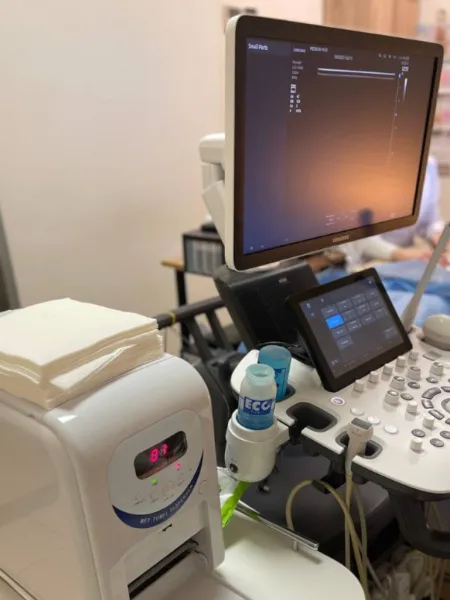
Prostate Ultrasound (Prostate Scan):
What is it?
• An ultrasound diagnostic method that allows for the assessment of the size, shape, and structure of the prostate.
• It can be performed in two ways:
• Transabdominally (through the anterior abdominal wall);
• Transrectally (TRUS) — through the rectum, providing a more accurate image.
Why is a prostate ultrasound performed?
• For the diagnosis of prostatitis, adenoma, and tumor diseases.
• In cases of complaints about frequent or difficult urination.
• To detect cysts, calcifications, or inflammatory changes.
• In cases of male infertility — to assess the condition of the seminal vesicles.
• For preventive purposes in men over 40 years old.
What can be seen on an ultrasound?
• The size and shape of the prostate.
• The structure of tissues, presence of inflammation, or neoplasms.
• Seminal vesicles and their changes.
• Residual urine in the bladder after urination.
When is it prescribed?
• In cases of urination disorders, perineal pain, decreased potency.
• In cases of infertility.
• When prostatitis, adenoma, or prostate cancer is suspected.
• For preventive purposes — annually after 40 years of age.
Preparation for the examination:
• For transabdominal ultrasound — do not empty the bladder 2 hours before the procedure.
How the procedure is conducted:
• In the transabdominal method, the probe is moved over the abdomen in the pubic area.
• In TRUS, a thin probe is inserted into the rectum (the procedure is easily tolerated, with minimal discomfort).
• The duration of the examination is 10-15 minutes.
What is it?
• An ultrasound diagnostic method that allows for the assessment of the size, shape, and structure of the prostate.
• It can be performed in two ways:
• Transabdominally (through the anterior abdominal wall);
• Transrectally (TRUS) — through the rectum, providing a more accurate image.
Why is a prostate ultrasound performed?
• For the diagnosis of prostatitis, adenoma, and tumor diseases.
• In cases of complaints about frequent or difficult urination.
• To detect cysts, calcifications, or inflammatory changes.
• In cases of male infertility — to assess the condition of the seminal vesicles.
• For preventive purposes in men over 40 years old.
What can be seen on an ultrasound?
• The size and shape of the prostate.
• The structure of tissues, presence of inflammation, or neoplasms.
• Seminal vesicles and their changes.
• Residual urine in the bladder after urination.
When is it prescribed?
• In cases of urination disorders, perineal pain, decreased potency.
• In cases of infertility.
• When prostatitis, adenoma, or prostate cancer is suspected.
• For preventive purposes — annually after 40 years of age.
Preparation for the examination:
• For transabdominal ultrasound — do not empty the bladder 2 hours before the procedure.
How the procedure is conducted:
• In the transabdominal method, the probe is moved over the abdomen in the pubic area.
• In TRUS, a thin probe is inserted into the rectum (the procedure is easily tolerated, with minimal discomfort).
• The duration of the examination is 10-15 minutes.


