
This information is provided for reference purposes only and does not constitute advertising, an offer, a public offering, or a user manual. It is presented solely for the information of our patients abroad. This website does not engage in any form of distance selling. The sale, distribution, delivery, or prescription of products is not permitted through this website. Products and medical services may only be used as prescribed by a physician. Consultations are provided by clinic specialists in person or via remote medical consultations within the framework of current legislation. Please note that this directory does not programmatically permit the sale of products.
Speckle-tracking echocardiography (Speckle Tracking Echocardiography, STE)
Speckle Tracking Echocardiography (STE) at the "Genesis Dnipro" clinic — innovative heart diagnostics.
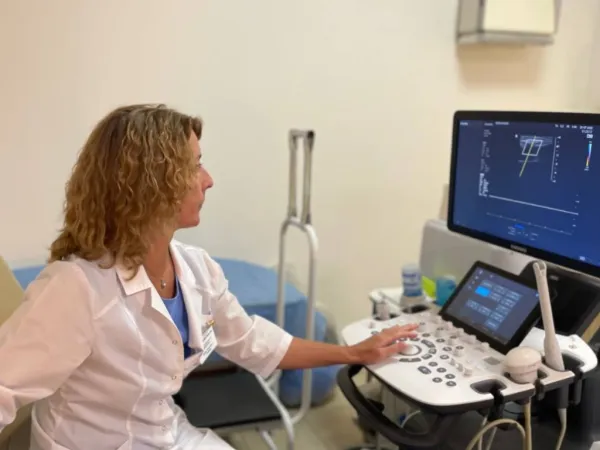
Speckle Tracking Echocardiography (STE) is an innovative method of cardiac ultrasound diagnostics that allows for a more accurate assessment of myocardial function. Unlike standard ultrasound, this technology analyzes the movement of individual segments of the heart muscle (known as "speckles") in real-time.
This enables the physician to:
- Detect hidden myocardial function abnormalities that are not yet visible on a standard ECG or echocardiography;
- Assess longitudinal, radial, and circumferential deformation of the heart muscle;
- Diagnose early signs of heart failure, ischemic disease, and cardiomyopathies;
- Monitor the patient's condition dynamics during treatment.
The method is particularly beneficial for patients with hypertension, a history of heart attack, diabetes, undergoing cancer treatment (cardiotoxic therapy), as well as for individuals at risk for cardiovascular diseases.
The examination is non-invasive, painless, and safe, requiring no special preparation.
This enables the physician to:
- Detect hidden myocardial function abnormalities that are not yet visible on a standard ECG or echocardiography;
- Assess longitudinal, radial, and circumferential deformation of the heart muscle;
- Diagnose early signs of heart failure, ischemic disease, and cardiomyopathies;
- Monitor the patient's condition dynamics during treatment.
The method is particularly beneficial for patients with hypertension, a history of heart attack, diabetes, undergoing cancer treatment (cardiotoxic therapy), as well as for individuals at risk for cardiovascular diseases.
The examination is non-invasive, painless, and safe, requiring no special preparation.


