
Информация опубликована в справочных целях и не является рекламой, офертой, публичным предложением или руководством к применению. Представлена исключительно для информирования наших пациентов пребывающих за рубежом. Сайт не осуществляет никакую дистанционную торговлю. Продажа, распространение, доставка и назначение товаров через веб-ресурс не производятся. Применение товаров и медицинских услуг возможно исключительно по назначению врача. Консультации предоставляются специалистами клиники в очном формате или посредством дистанционной медицинской консультации в рамках действующего законодательства. Прошу обратить Ваше внимание, что в данном справочнике продажа товаров програмно не предусмотрена.
Fetal heart ultrasound (in utero)
Fetal heart ultrasound (intrauterine) at the "Genesis Dnipro" clinic — an accurate assessment of the baby's heart function before birth.
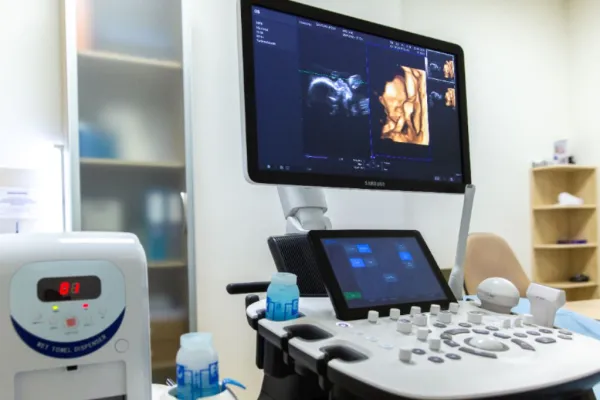
Fetal echocardiography (prenatal) is an ultrasound examination conducted to assess the condition of the unborn baby's heart while in the mother's womb. This procedure allows the doctor to view the fetal heart's anatomy, structure, blood flow, and valve function, as well as to detect possible heart defects or other pathologies.
Indications for fetal echocardiography:
• Suspected heart defects in the fetus (e.g., family history of heart diseases).
• Developmental anomalies or abnormalities in other organs that may be associated with heart function disorders.
• Maternal age over 35 years (increased risk of heart defects in the child).
• Signs of developmental problems in the fetus detected during a routine ultrasound.
• Maternal diseases or genetic disorders, such as diabetes or syndromes (e.g., Down syndrome).
Purpose of the examination:
Fetal echocardiography helps to detect any anomalies or disorders at an early stage, which is important for planning further treatment and preparing for potential medical assistance during delivery.
Indications for fetal echocardiography:
• Suspected heart defects in the fetus (e.g., family history of heart diseases).
• Developmental anomalies or abnormalities in other organs that may be associated with heart function disorders.
• Maternal age over 35 years (increased risk of heart defects in the child).
• Signs of developmental problems in the fetus detected during a routine ultrasound.
• Maternal diseases or genetic disorders, such as diabetes or syndromes (e.g., Down syndrome).
Purpose of the examination:
Fetal echocardiography helps to detect any anomalies or disorders at an early stage, which is important for planning further treatment and preparing for potential medical assistance during delivery.


