
Information about medicinal products published on this website is provided for informational purposes only and does not constitute advertising, a public offer, an offer for sale, or instructions for use.
The use of medicinal products is permitted only upon a doctor’s prescription. Consultations are provided by clinic specialists in person or online in accordance with applicable law.
The use of medicinal products is permitted only upon a doctor’s prescription. Consultations are provided by clinic specialists in person or online in accordance with applicable law.
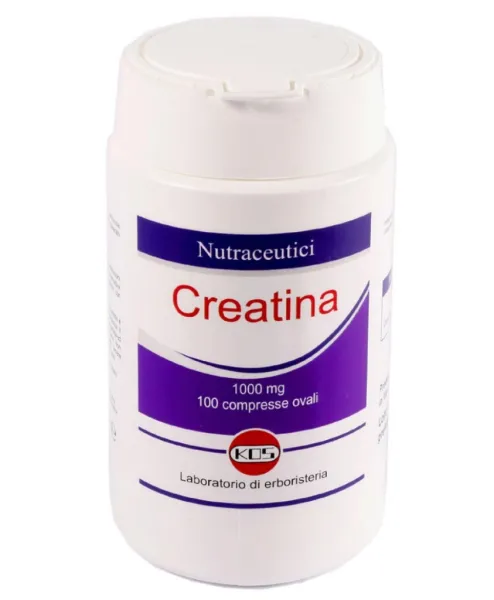
CREATINA 1000 mg (ITALY)
Creatine is used as a sports dietary supplement to:
• increase strength;
• improve performance during short-term, high-intensity exercise;
• accelerate recovery after workouts;
• support gains in muscle mass during regular physical training.
The most pronounced effects are observed when supplementation is combined with strength (resistance) training.
• increase strength;
• improve performance during short-term, high-intensity exercise;
• accelerate recovery after workouts;
• support gains in muscle mass during regular physical training.
The most pronounced effects are observed when supplementation is combined with strength (resistance) training.
Directions for use
Usually recommended:
• 3–5 g of creatine per day (3–5 tablets of 1000 mg each), regardless of timing.
• May be taken after training or with a meal.
• Take with a sufficient amount of water.
Loading phase (optional)
Some athletes use:
• 20 g/day (divided into 4 doses) for 5–7 days;
• then switch to 3–5 g/day.
However, recent studies show that a daily intake of 3–5 g without loading also effectively saturates muscles with creatine, only somewhat more slowly.
Contraindications
Not recommended for:
• anyone allergic to the product’s ingredients;
• children and adolescents (unless otherwise advised by a physician);
• during pregnancy and breastfeeding without consulting a doctor;
• people with kidney disease — only after consulting a specialist.
Possible side effects
Occasionally:
• stomach discomfort;
• bloating;
• fluid retention;
• weight gain due to increased intramuscular water.
When used at recommended doses, creatine is considered safe for most healthy adults.
Special precautions
• Drink an adequate amount of water (at least 1.5–2.5 L per day, unless medically contraindicated).
• Do not exceed the recommended dosage.
• This supplement does not replace a balanced diet.
• Store in a dry place at room temperature, away from sunlight and out of reach of children.
Contains 100 tablets per jar.
Usually recommended:
• 3–5 g of creatine per day (3–5 tablets of 1000 mg each), regardless of timing.
• May be taken after training or with a meal.
• Take with a sufficient amount of water.
Loading phase (optional)
Some athletes use:
• 20 g/day (divided into 4 doses) for 5–7 days;
• then switch to 3–5 g/day.
However, recent studies show that a daily intake of 3–5 g without loading also effectively saturates muscles with creatine, only somewhat more slowly.
Contraindications
Not recommended for:
• anyone allergic to the product’s ingredients;
• children and adolescents (unless otherwise advised by a physician);
• during pregnancy and breastfeeding without consulting a doctor;
• people with kidney disease — only after consulting a specialist.
Possible side effects
Occasionally:
• stomach discomfort;
• bloating;
• fluid retention;
• weight gain due to increased intramuscular water.
When used at recommended doses, creatine is considered safe for most healthy adults.
Special precautions
• Drink an adequate amount of water (at least 1.5–2.5 L per day, unless medically contraindicated).
• Do not exceed the recommended dosage.
• This supplement does not replace a balanced diet.
• Store in a dry place at room temperature, away from sunlight and out of reach of children.
Contains 100 tablets per jar.


