
Інформація опублікована з довідковою метою і не є рекламою, офертою, публічною пропозицією або керівництвом до застосування. Представлена виключно для інформування наших пацієнтів, які перебувають за кордоном. Сайт не здійснює жодної дистанційної торгівлі. Продаж, розповсюдження, доставка та призначення товарів через веб-ресурс не провадяться. Застосування товарів та медичних послуг можливе виключно за призначенням лікаря. Консультації надаються фахівцями клініки у очному форматі або за допомогою дистанційної медичної консультації у рамках чинного законодавства. Прошу звернути Вашу увагу, що у цьому довіднику продаж товарів програмно не передбачено.
Culture of a smear (from the throat, nose, wounds, genital tract)
Throat, oropharyngeal, and nasal swabs, as well as wound swab cultures at the "Genesis Dnipro" laboratory — detection of bacterial and fungal infections.
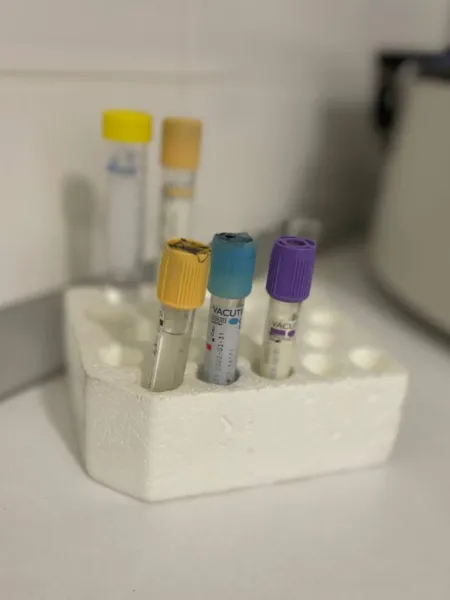
Throat / oropharynx / nose — mucosal swab.
Wound swab culture (soft tissue infections)
Genital tract swab culture (vagina, cervix, urethra depending on the case) — vaginal discharge, secretions.
Throat / oropharynx / nose — mucosal swab.
Wounds — exudate / pus / scraping from the edges / wound bed.
Conducted to diagnose the pathogen — to determine which bacteria or fungus is causing the infection.
Determination of sensitivity to antibiotics / antifungals — to choose a drug that effectively acts on the isolated microorganism. This is especially important if there is resistance.
Assessment of the degree of infection / microbial load — sometimes the number of colony-forming units (CFU) per unit volume is counted; helps to understand the severity of the infection.
Monitoring the effectiveness of treatment — after a course of antibiotics, it is checked whether the microorganisms have disappeared or become sensitive.
Detection of carriage — especially when symptoms are present or absent, but there is a risk of transmission to others.
Wound swab culture (soft tissue infections)
Genital tract swab culture (vagina, cervix, urethra depending on the case) — vaginal discharge, secretions.
Throat / oropharynx / nose — mucosal swab.
Wounds — exudate / pus / scraping from the edges / wound bed.
Conducted to diagnose the pathogen — to determine which bacteria or fungus is causing the infection.
Determination of sensitivity to antibiotics / antifungals — to choose a drug that effectively acts on the isolated microorganism. This is especially important if there is resistance.
Assessment of the degree of infection / microbial load — sometimes the number of colony-forming units (CFU) per unit volume is counted; helps to understand the severity of the infection.
Monitoring the effectiveness of treatment — after a course of antibiotics, it is checked whether the microorganisms have disappeared or become sensitive.
Detection of carriage — especially when symptoms are present or absent, but there is a risk of transmission to others.


