
Information about medicinal products published on this website is provided for informational purposes only and does not constitute advertising, a public offer, an offer for sale, or instructions for use.
The use of medicinal products is permitted only upon a doctor’s prescription. Consultations are provided by clinic specialists in person or online in accordance with applicable law.
The use of medicinal products is permitted only upon a doctor’s prescription. Consultations are provided by clinic specialists in person or online in accordance with applicable law.
OSTEOPOROSIS CHECK-UP
Osteoporosis Check-up — a comprehensive assessment to evaluate bone health and identify the causes of reduced bone density. The program includes mineral metabolism tests, vitamin D levels, a hormonal profile, bone remodeling markers, an assessment of kidney and liver function, bone densitometry, and specialist consultations.
650у.е.
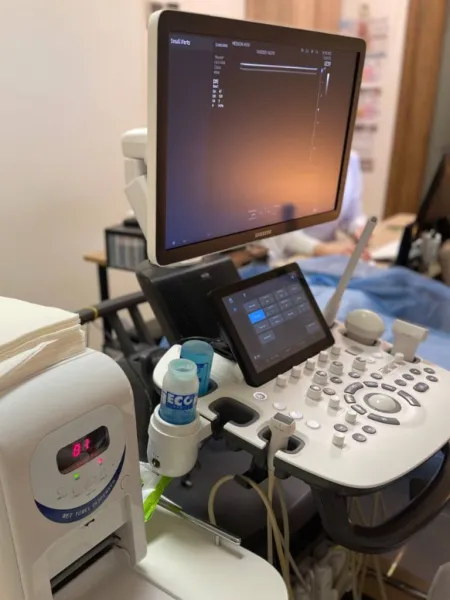
Our “OSTEOPOROSIS” Check-up includes:
Laboratory tests
General clinical tests:
Complete blood count with differential
Mineral metabolism:
Ionized calcium
Phosphorus
Magnesium
Additional laboratory parameters:
Ferritin
Vitamin D (25-hydroxyvitamin D, 25(OH)D)
Homocysteine
Bone remodeling markers:
β-CrossLaps (blood)
Bone matrix formation marker (Total P1NP)
Hormonal profile and ovarian reserve assessment:
Parathyroid hormone (PTH 1-84), highly specific, biointact
Thyroid-stimulating hormone (TSH)
Luteinizing hormone (LH)
Follicle-stimulating hormone (FSH)
Estradiol (E2)
Total testosterone (total T, serum)
Anti-Müllerian hormone (AMH, MIS)
Liver panel:
Total protein
Albumin
Total bilirubin
Direct bilirubin
ALT
AST
Alkaline phosphatase
GGT
Kidney panel:
Urea
Creatinine (estimated glomerular filtration rate calculated using the CKD-EPI formula)
Uric acid
Urine laboratory profile:
Calcium (24-hour urine)
Instrumental diagnostics:
Quantitative ultrasound densitometry (QUS)
Specialist consultations:
Consultation with a physician
Consultation with a gynecologist
---------------------------------------
Preparation for the “OSTEOPOROSIS” Check-up
Blood collection
Blood should be drawn in the morning strictly on an empty stomach after 8–12 hours of overnight fasting. Plain still water is allowed.
Diet the day before
For 24 hours, avoid fatty, fried, and spicy foods, as well as alcohol.
For 2–3 days, it is advisable to limit foods high in purines: red meat, offal, seafood, and legumes.
On the day before the homocysteine test, it is not recommended to consume large amounts of methionine-rich foods, such as red meat, cheese, and eggs.
Physical and emotional exertion
For 24 hours, avoid intense physical activity, visits to steam rooms and saunas, and significant emotional stress.
Smoking
Do not smoke for at least 1–2 hours before blood collection.
Before blood collection
Before the test, it is recommended to sit quietly and rest for 15–20 minutes.
Medication use
Regular medication use should be coordinated with your physician. Morning doses of medications that may affect test results should be taken after blood collection unless otherwise instructed by the physician.
If the patient is taking iron supplements, the temporary discontinuation of these medications before ferritin testing must be agreed upon with the physician in advance.
Preparation for hormone tests
For women with a preserved menstrual cycle:
FSH, LH, and estradiol are usually tested on days 2–5 of the menstrual cycle.
AMH is significantly less dependent on the day of the menstrual cycle and may be tested on different days of the cycle unless otherwise recommended by the physician.
Testosterone is recommended to be tested in the morning.
When taking levothyroxine, TSH should be tested before taking the morning tablet.
Bone metabolism markers
β-CrossLaps and Total P1NP
Blood should be drawn in the morning, strictly on an empty stomach, preferably before 9:00 a.m.
Parathyroid hormone (PTH)
Blood should be drawn in the morning on an empty stomach.
Ionized calcium
During blood collection, prolonged venous compression with a tourniquet should be avoided.
Preparation for 24-hour urine collection for calcium
Do not collect the first morning urine; empty the bladder into the toilet. Record the exact start time of collection.
After that, collect all urine passed over the next 24 hours in a single container with a capacity of 2.5–3 liters.
Collect the final portion the following morning, exactly 24 hours after the start of collection.
Throughout the collection period, the container should be stored in a cool, dark place at a temperature of +4 to +8 °C.
Diuretic medications may only be changed or discontinued before the test in consultation with a physician. For 48 hours, it is recommended to avoid excessive consumption of mineral water.
Laboratory tests
General clinical tests:
Complete blood count with differential
Mineral metabolism:
Ionized calcium
Phosphorus
Magnesium
Additional laboratory parameters:
Ferritin
Vitamin D (25-hydroxyvitamin D, 25(OH)D)
Homocysteine
Bone remodeling markers:
β-CrossLaps (blood)
Bone matrix formation marker (Total P1NP)
Hormonal profile and ovarian reserve assessment:
Parathyroid hormone (PTH 1-84), highly specific, biointact
Thyroid-stimulating hormone (TSH)
Luteinizing hormone (LH)
Follicle-stimulating hormone (FSH)
Estradiol (E2)
Total testosterone (total T, serum)
Anti-Müllerian hormone (AMH, MIS)
Liver panel:
Total protein
Albumin
Total bilirubin
Direct bilirubin
ALT
AST
Alkaline phosphatase
GGT
Kidney panel:
Urea
Creatinine (estimated glomerular filtration rate calculated using the CKD-EPI formula)
Uric acid
Urine laboratory profile:
Calcium (24-hour urine)
Instrumental diagnostics:
Quantitative ultrasound densitometry (QUS)
Specialist consultations:
Consultation with a physician
Consultation with a gynecologist
---------------------------------------
Preparation for the “OSTEOPOROSIS” Check-up
Blood collection
Blood should be drawn in the morning strictly on an empty stomach after 8–12 hours of overnight fasting. Plain still water is allowed.
Diet the day before
For 24 hours, avoid fatty, fried, and spicy foods, as well as alcohol.
For 2–3 days, it is advisable to limit foods high in purines: red meat, offal, seafood, and legumes.
On the day before the homocysteine test, it is not recommended to consume large amounts of methionine-rich foods, such as red meat, cheese, and eggs.
Physical and emotional exertion
For 24 hours, avoid intense physical activity, visits to steam rooms and saunas, and significant emotional stress.
Smoking
Do not smoke for at least 1–2 hours before blood collection.
Before blood collection
Before the test, it is recommended to sit quietly and rest for 15–20 minutes.
Medication use
Regular medication use should be coordinated with your physician. Morning doses of medications that may affect test results should be taken after blood collection unless otherwise instructed by the physician.
If the patient is taking iron supplements, the temporary discontinuation of these medications before ferritin testing must be agreed upon with the physician in advance.
Preparation for hormone tests
For women with a preserved menstrual cycle:
FSH, LH, and estradiol are usually tested on days 2–5 of the menstrual cycle.
AMH is significantly less dependent on the day of the menstrual cycle and may be tested on different days of the cycle unless otherwise recommended by the physician.
Testosterone is recommended to be tested in the morning.
When taking levothyroxine, TSH should be tested before taking the morning tablet.
Bone metabolism markers
β-CrossLaps and Total P1NP
Blood should be drawn in the morning, strictly on an empty stomach, preferably before 9:00 a.m.
Parathyroid hormone (PTH)
Blood should be drawn in the morning on an empty stomach.
Ionized calcium
During blood collection, prolonged venous compression with a tourniquet should be avoided.
Preparation for 24-hour urine collection for calcium
Do not collect the first morning urine; empty the bladder into the toilet. Record the exact start time of collection.
After that, collect all urine passed over the next 24 hours in a single container with a capacity of 2.5–3 liters.
Collect the final portion the following morning, exactly 24 hours after the start of collection.
Throughout the collection period, the container should be stored in a cool, dark place at a temperature of +4 to +8 °C.
Diuretic medications may only be changed or discontinued before the test in consultation with a physician. For 48 hours, it is recommended to avoid excessive consumption of mineral water.


