
Information about medicinal products published on this website is provided for informational purposes only and does not constitute advertising, a public offer, an offer for sale, or instructions for use.
The use of medicinal products is permitted only upon a doctor’s prescription. Consultations are provided by clinic specialists in person or online in accordance with applicable law.
The use of medicinal products is permitted only upon a doctor’s prescription. Consultations are provided by clinic specialists in person or online in accordance with applicable law.
Infertility checkup (for a married couple)
A comprehensive evaluation makes it possible to determine the causes of male and female infertility, assess a couple’s reproductive potential, detect hormonal, infectious, genetic, immunological, and metabolic disorders, and select the most effective treatment strategy and preparation for natural conception or assisted reproductive technology programs.
1800у.е.
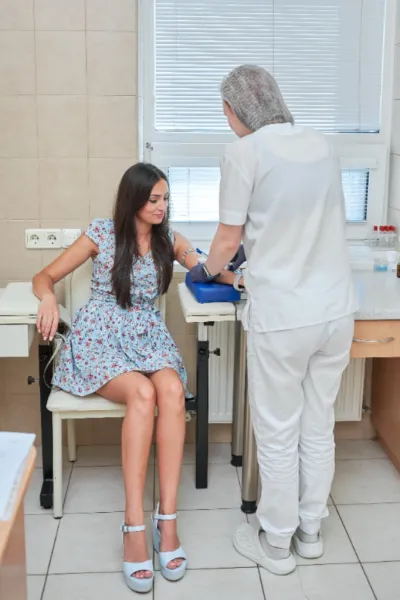
Our CHECKUP includes:
Laboratory and instrumental assessment of the woman
Reproductive hormones:
- Estradiol (E2)
- Follicle-stimulating hormone (FSH)
- Luteinizing hormone (LH)
- Prolactin
- Total testosterone
- Free testosterone
- Sex hormone–binding globulin (SHBG) — drawn on cycle days 2–5
- Progesterone — on the 5th day after ovulation
- Dehydroepiandrosterone sulfate (DHEA‑S)
- Anti‑Müllerian hormone (AMH)
Thyroid gland:
- Thyroid‑stimulating hormone (TSH)
- Free T4
- Free T3
- Anti‑thyroglobulin antibodies (Anti‑TG)
- Antibodies to thyroid peroxidase (Anti‑TPO)
Infectious profile:
- Syphilis (Treponema pallidum, total antibodies)
- HIV
- Hepatitis B
- Hepatitis C
- Chlamydia trachomatis (IgM, IgG)
- Cytomegalovirus (CMV) (IgM, IgG)
- Rubella virus (IgM, IgG)
- Toxoplasma gondii (IgM, IgG)
Gynecological examinations:
- Vaginal/cervical swab for microflora
- Cytological examination (Pap smear)
Metabolic and immunohematological panel:
- Full blood count (complete blood count)
- Urinalysis
- Insulin, HOMA index
- Glycated hemoglobin (HbA1c)
- Liver panel (total protein, albumin, total and direct bilirubin, ALT, AST, alkaline phosphatase, GGT)
- Kidney panel (urea, creatinine)
- Uric acid
- Blood electrolytes (potassium, sodium, chloride, calcium)
- High‑sensitivity C‑reactive protein (hs‑CRP)
- Ferritin
- Vitamin D (25(OH)D)
- Homocysteine
- Coagulation panel (prothrombin index/Quick, INR, APTT, thrombin time, fibrinogen)
- Antiphospholipid panel
- Blood group and Rh factor
Genetic diagnostics:
- Genetic testing for thrombophilia
- Genetic testing for folate‑cycle disorders
Ultrasound diagnostics:
- Assessment of ovarian reserve
- Doppler of the uterus and adnexa
- Folliculometry (dynamic ultrasound)
Ultrasound of:
- Abdominal organs
- Urinary system
- Thyroid gland
Instrumental examinations:
- Extended colposcopy
- Spirometry
- Echocardiography with Doppler
- Doppler ultrasound of head and neck vessels
- Doppler ultrasound of lower limb vessels
Specialist consultations:
- Consultation with a reproductive gynecologist
- Consultation with a general physician (internist)
- Consultation with an anesthesiologist (if needed)
- Consultation with a breast specialist (mammologist) with breast ultrasound
Laboratory and instrumental assessment of the man
Reproductive diagnostics:
- Semen analysis
- MAR test
- Test for sperm oxidative stress
- Hormonal profile:
- Follicle‑stimulating hormone (FSH)
- Luteinizing hormone (LH)
- Prolactin
- Total testosterone
- Sex hormone–binding globulin (SHBG)
- Free testosterone index
- Estradiol
Laboratory tests:
- Full blood count
- Urinalysis
- Blood glucose
- Ferritin
- Vitamin D (25(OH)D)
- Homocysteine
Infectious profile:
- Chlamydia trachomatis (IgM, IgA, IgG)
- Syphilis (Treponema pallidum, total antibodies)
- HIV
- Hepatitis B
- Hepatitis C
- Blood group and Rh factor
Instrumental diagnostics:
- Scrotal ultrasound
- Prostate ultrasound
Consultation with a urologist‑andrologist
Medical support for the couple throughout the entire assessment.
How to prepare for a comprehensive examination for reproductive disorders
To obtain the most accurate results, please follow these simple preparation rules.
2–3 days before the examination:
- Avoid alcohol.
- Limit intense physical exertion and strength training.
- If possible, avoid severe stress and lack of sleep.
- Do not start any new medications without consulting your treating physician.
The day before tests:
- Avoid fatty, fried and very spicy foods.
- Do not visit a sauna or steam bath and do not take hot baths.
Sexual activity:
- Women are advised to abstain from sexual intercourse for 24–48 hours before certain hormonal tests and swabs.
- Men should practice sexual abstinence for 2–5 days before semen analysis and the MAR test.
On the day of the examination:
- Blood must be drawn in the morning while fasting.
- There should be 8–12 hours between the last meal and blood draw.
- Only plain still water is allowed.
- Do not smoke (including e‑cigarettes and heated tobacco products) for at least 1–2 hours before testing.
- After blood collection, sit quietly for 10–15 minutes.
Special preparation for certain tests
Reproductive hormones in women:
- FSH, LH, estradiol, prolactin, testosterone, SHBG — on cycle days 2–5.
- Progesterone — five days after confirmed ovulation (or as directed by your physician).
- Anti‑Müllerian hormone (AMH) can be taken on almost any day of the cycle unless otherwise instructed.
Thyroid hormones:
- Drawn in the morning while fasting. If you take levothyroxine, it is recommended to have blood drawn before your morning dose.
Insulin and HOMA index:
- Must be taken strictly fasting after an overnight fast of at least 8–12 hours.
Coagulation panel and homocysteine:
- Avoid alcohol, intense physical exercise and overeating for 24 hours prior. The test is done in the morning while fasting.
Vaginal/cervical swab and cytology:
- Do not perform during menstruation.
- Abstain from sexual intercourse for 48 hours.
- Do not use vaginal suppositories, creams, tablets, douching or intimate antiseptics for 48 hours (unless prescribed by the doctor).
Folliculometry:
- Performed several times during one menstrual cycle according to an individualized schedule set by the physician.
Pelvic ultrasound:
- Performed on cycle days recommended by the physician. Depending on the type of exam, a full bladder or an empty bladder may be required.
Semen analysis and MAR test:
- Sexual abstinence 2–5 days.
- Do not consume alcohol for at least 72 hours.
- Avoid overheating (bath, sauna, hot baths) for 3–5 days.
- Avoid heavy physical exertion.
- If you have a fever or have recently had an infection, the test should be postponed.
Important:
If you regularly take medications (hormones, anticoagulants, thyroid medications, glucose‑lowering drugs or others), do not stop them on your own. Inform your physician and the laboratory staff about all medications you are taking before the examination. This information helps correctly interpret results and choose the most effective treatment strategy.
Laboratory and instrumental assessment of the woman
Reproductive hormones:
- Estradiol (E2)
- Follicle-stimulating hormone (FSH)
- Luteinizing hormone (LH)
- Prolactin
- Total testosterone
- Free testosterone
- Sex hormone–binding globulin (SHBG) — drawn on cycle days 2–5
- Progesterone — on the 5th day after ovulation
- Dehydroepiandrosterone sulfate (DHEA‑S)
- Anti‑Müllerian hormone (AMH)
Thyroid gland:
- Thyroid‑stimulating hormone (TSH)
- Free T4
- Free T3
- Anti‑thyroglobulin antibodies (Anti‑TG)
- Antibodies to thyroid peroxidase (Anti‑TPO)
Infectious profile:
- Syphilis (Treponema pallidum, total antibodies)
- HIV
- Hepatitis B
- Hepatitis C
- Chlamydia trachomatis (IgM, IgG)
- Cytomegalovirus (CMV) (IgM, IgG)
- Rubella virus (IgM, IgG)
- Toxoplasma gondii (IgM, IgG)
Gynecological examinations:
- Vaginal/cervical swab for microflora
- Cytological examination (Pap smear)
Metabolic and immunohematological panel:
- Full blood count (complete blood count)
- Urinalysis
- Insulin, HOMA index
- Glycated hemoglobin (HbA1c)
- Liver panel (total protein, albumin, total and direct bilirubin, ALT, AST, alkaline phosphatase, GGT)
- Kidney panel (urea, creatinine)
- Uric acid
- Blood electrolytes (potassium, sodium, chloride, calcium)
- High‑sensitivity C‑reactive protein (hs‑CRP)
- Ferritin
- Vitamin D (25(OH)D)
- Homocysteine
- Coagulation panel (prothrombin index/Quick, INR, APTT, thrombin time, fibrinogen)
- Antiphospholipid panel
- Blood group and Rh factor
Genetic diagnostics:
- Genetic testing for thrombophilia
- Genetic testing for folate‑cycle disorders
Ultrasound diagnostics:
- Assessment of ovarian reserve
- Doppler of the uterus and adnexa
- Folliculometry (dynamic ultrasound)
Ultrasound of:
- Abdominal organs
- Urinary system
- Thyroid gland
Instrumental examinations:
- Extended colposcopy
- Spirometry
- Echocardiography with Doppler
- Doppler ultrasound of head and neck vessels
- Doppler ultrasound of lower limb vessels
Specialist consultations:
- Consultation with a reproductive gynecologist
- Consultation with a general physician (internist)
- Consultation with an anesthesiologist (if needed)
- Consultation with a breast specialist (mammologist) with breast ultrasound
Laboratory and instrumental assessment of the man
Reproductive diagnostics:
- Semen analysis
- MAR test
- Test for sperm oxidative stress
- Hormonal profile:
- Follicle‑stimulating hormone (FSH)
- Luteinizing hormone (LH)
- Prolactin
- Total testosterone
- Sex hormone–binding globulin (SHBG)
- Free testosterone index
- Estradiol
Laboratory tests:
- Full blood count
- Urinalysis
- Blood glucose
- Ferritin
- Vitamin D (25(OH)D)
- Homocysteine
Infectious profile:
- Chlamydia trachomatis (IgM, IgA, IgG)
- Syphilis (Treponema pallidum, total antibodies)
- HIV
- Hepatitis B
- Hepatitis C
- Blood group and Rh factor
Instrumental diagnostics:
- Scrotal ultrasound
- Prostate ultrasound
Consultation with a urologist‑andrologist
Medical support for the couple throughout the entire assessment.
How to prepare for a comprehensive examination for reproductive disorders
To obtain the most accurate results, please follow these simple preparation rules.
2–3 days before the examination:
- Avoid alcohol.
- Limit intense physical exertion and strength training.
- If possible, avoid severe stress and lack of sleep.
- Do not start any new medications without consulting your treating physician.
The day before tests:
- Avoid fatty, fried and very spicy foods.
- Do not visit a sauna or steam bath and do not take hot baths.
Sexual activity:
- Women are advised to abstain from sexual intercourse for 24–48 hours before certain hormonal tests and swabs.
- Men should practice sexual abstinence for 2–5 days before semen analysis and the MAR test.
On the day of the examination:
- Blood must be drawn in the morning while fasting.
- There should be 8–12 hours between the last meal and blood draw.
- Only plain still water is allowed.
- Do not smoke (including e‑cigarettes and heated tobacco products) for at least 1–2 hours before testing.
- After blood collection, sit quietly for 10–15 minutes.
Special preparation for certain tests
Reproductive hormones in women:
- FSH, LH, estradiol, prolactin, testosterone, SHBG — on cycle days 2–5.
- Progesterone — five days after confirmed ovulation (or as directed by your physician).
- Anti‑Müllerian hormone (AMH) can be taken on almost any day of the cycle unless otherwise instructed.
Thyroid hormones:
- Drawn in the morning while fasting. If you take levothyroxine, it is recommended to have blood drawn before your morning dose.
Insulin and HOMA index:
- Must be taken strictly fasting after an overnight fast of at least 8–12 hours.
Coagulation panel and homocysteine:
- Avoid alcohol, intense physical exercise and overeating for 24 hours prior. The test is done in the morning while fasting.
Vaginal/cervical swab and cytology:
- Do not perform during menstruation.
- Abstain from sexual intercourse for 48 hours.
- Do not use vaginal suppositories, creams, tablets, douching or intimate antiseptics for 48 hours (unless prescribed by the doctor).
Folliculometry:
- Performed several times during one menstrual cycle according to an individualized schedule set by the physician.
Pelvic ultrasound:
- Performed on cycle days recommended by the physician. Depending on the type of exam, a full bladder or an empty bladder may be required.
Semen analysis and MAR test:
- Sexual abstinence 2–5 days.
- Do not consume alcohol for at least 72 hours.
- Avoid overheating (bath, sauna, hot baths) for 3–5 days.
- Avoid heavy physical exertion.
- If you have a fever or have recently had an infection, the test should be postponed.
Important:
If you regularly take medications (hormones, anticoagulants, thyroid medications, glucose‑lowering drugs or others), do not stop them on your own. Inform your physician and the laboratory staff about all medications you are taking before the examination. This information helps correctly interpret results and choose the most effective treatment strategy.


