
Information about medicinal products published on this website is provided for informational purposes only and does not constitute advertising, a public offer, an offer for sale, or instructions for use.
The use of medicinal products is permitted only upon a doctor’s prescription. Consultations are provided by clinic specialists in person or online in accordance with applicable law.
The use of medicinal products is permitted only upon a doctor’s prescription. Consultations are provided by clinic specialists in person or online in accordance with applicable law.
CHECKUP POLYNEUROPATHY
Polyneuropathy can be a consequence of diabetes mellitus, vitamin deficiencies, autoimmune diseases, viral infections, intoxications, and other causes. A comprehensive check-up helps identify the source of peripheral nerve damage, assess the extent of the impairments, and select the most effective treatment strategy based on laboratory and instrumental diagnostics.
1000у.е.
Our check-up includes:
General clinical and biochemical tests:
- Comprehensive clinical blood count.
- Glycated hemoglobin (HbA1c).
- HOMA index (assessment of insulin resistance).
Liver function:
- ALT (alanine aminotransferase);
- AST (aspartate aminotransferase);
- GGT (gamma-glutamyl transferase).
- Lactate dehydrogenase (LDH).
- C-reactive protein (CRP).
- Cyanocobalamin (vitamin B12).
- Folic acid (serum).
- Creatinine.
Immunological diagnostics:
- Ganglioside profile, IgG/IgM antibodies.
- Antinuclear antibodies (ANA, indirect immunofluorescence method).
- Antineutrophil cytoplasmic antibodies (ANCA) – diagnosis of systemic vasculitis.
- Rheumatoid factor (RF).
Infectious diagnostics:
PCR for Epstein-Barr virus DNA.
- Anti-EBV VCA IgM (antibodies to capsid antigen).
- Anti-EBV VCA IgG (antibodies to capsid antigen).
- Anti-EBV EA IgG (antibodies to early antigen).
- Anti-EBV EBNA IgG (antibodies to nuclear antigen).
Other infectious tests:
- Cytomegalovirus (CMV), IgG and IgM antibodies.
- Varicella Zoster virus, IgG antibodies.
- Viral hepatitis B and C.
- HIV test.
- Borrelia burgdorferi (Lyme disease pathogen), IgG and IgM antibodies.
- Campylobacteriosis, IgA and IgG antibodies (Rödger laboratory, Germany).
Instrumental diagnostics:
- Electroneuromyography (ENMG): stimulation; needle EMG (as indicated).
Neurologist consultation.
Conclusion and clinical interpretation
Based on the examination results, the physician performs a comprehensive evaluation of the collected data, determines the most probable cause of polyneuropathy, the extent of peripheral nervous system involvement, and develops an individualized plan for further treatment or additional examination.
-------------------------------------------
Preparation for laboratory testing (blood analysis)
Following preparation guidelines is essential to obtain the most accurate test results and to avoid false alterations in glucose, liver enzymes, vitamin levels, and other laboratory markers.
Fasting
Blood must be drawn strictly on an empty stomach after 8–12 hours of overnight fasting. On the morning of the test, do not eat, drink tea, coffee, juices, or other beverages, and do not chew gum.
Fluid intake
1–2 hours before blood sampling, it is recommended to drink 1–2 glasses of plain still water. This reduces blood viscosity and facilitates blood sampling from the vein.
Alcohol
Avoid all alcohol consumption 24–48 hours prior to testing. This is especially important for accurate assessment of ALT, AST, and GGT, which are sensitive to the toxic effects of alcohol.
Medications and vitamins
If you are taking medications or vitamin complexes containing B vitamins (especially vitamin B12 and folic acid), it is recommended to discontinue them at least 5–7 days before testing after consulting with your attending physician. Otherwise, results may not reflect the true vitamin levels in your body. Intake of essential medications (e.g., hypoglycemic or antihypertensive drugs) should be individually discussed with your doctor.
Physical activity and stress
Avoid intense physical activity, as well as visiting saunas or baths for 24 hours before testing. Immediately before blood draw, it is advisable to sit calmly for 10–15 minutes to exclude the influence of physical or emotional stress on test results.
Preparation for physical and neurological examination
Nerve ending sensitivity and vascular tone of the feet are very labile and depend on external factors.
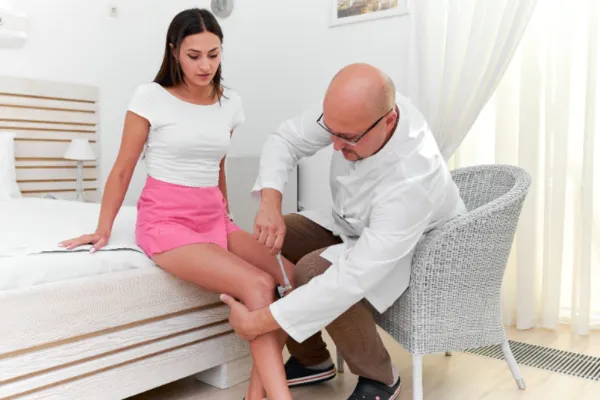
Hygiene and clothing: Feet and lower legs should be clean. The patient should wear clothing that can be easily removed or lifted above the knee (to allow unobstructed examination of knee and Achilles reflexes, as well as tests with monofilament and tuning fork).
Thermal factors: Do not apply warming or cooling ointments or creams to the feet, or take contrast showers 2–3 hours before the examination. The skin of the feet should have a natural temperature. It is not recommended to perform temperature and pain sensitivity tests immediately after the patient has come in from severe cold or heat; allow the skin to acclimate to room temperature (20–22 °C) for 15 minutes.
Nicotine and stimulants: Do not smoke or consume caffeine 1–2 hours before the physical exam and ankle-brachial index (ABI) measurement. Nicotine causes sharp spasm of peripheral microvessels, which distorts the assessment of arterial pulse in the feet and ABI values.
Cosmetics: Do not apply thick greasy creams or oils on the skin of the feet on the day of the exam, as they may temporarily alter tactile threshold during monofilament testing.
General clinical and biochemical tests:
- Comprehensive clinical blood count.
- Glycated hemoglobin (HbA1c).
- HOMA index (assessment of insulin resistance).
Liver function:
- ALT (alanine aminotransferase);
- AST (aspartate aminotransferase);
- GGT (gamma-glutamyl transferase).
- Lactate dehydrogenase (LDH).
- C-reactive protein (CRP).
- Cyanocobalamin (vitamin B12).
- Folic acid (serum).
- Creatinine.
Immunological diagnostics:
- Ganglioside profile, IgG/IgM antibodies.
- Antinuclear antibodies (ANA, indirect immunofluorescence method).
- Antineutrophil cytoplasmic antibodies (ANCA) – diagnosis of systemic vasculitis.
- Rheumatoid factor (RF).
Infectious diagnostics:
PCR for Epstein-Barr virus DNA.
- Anti-EBV VCA IgM (antibodies to capsid antigen).
- Anti-EBV VCA IgG (antibodies to capsid antigen).
- Anti-EBV EA IgG (antibodies to early antigen).
- Anti-EBV EBNA IgG (antibodies to nuclear antigen).
Other infectious tests:
- Cytomegalovirus (CMV), IgG and IgM antibodies.
- Varicella Zoster virus, IgG antibodies.
- Viral hepatitis B and C.
- HIV test.
- Borrelia burgdorferi (Lyme disease pathogen), IgG and IgM antibodies.
- Campylobacteriosis, IgA and IgG antibodies (Rödger laboratory, Germany).
Instrumental diagnostics:
- Electroneuromyography (ENMG): stimulation; needle EMG (as indicated).
Neurologist consultation.
Conclusion and clinical interpretation
Based on the examination results, the physician performs a comprehensive evaluation of the collected data, determines the most probable cause of polyneuropathy, the extent of peripheral nervous system involvement, and develops an individualized plan for further treatment or additional examination.
-------------------------------------------
Preparation for laboratory testing (blood analysis)
Following preparation guidelines is essential to obtain the most accurate test results and to avoid false alterations in glucose, liver enzymes, vitamin levels, and other laboratory markers.
Fasting
Blood must be drawn strictly on an empty stomach after 8–12 hours of overnight fasting. On the morning of the test, do not eat, drink tea, coffee, juices, or other beverages, and do not chew gum.
Fluid intake
1–2 hours before blood sampling, it is recommended to drink 1–2 glasses of plain still water. This reduces blood viscosity and facilitates blood sampling from the vein.
Alcohol
Avoid all alcohol consumption 24–48 hours prior to testing. This is especially important for accurate assessment of ALT, AST, and GGT, which are sensitive to the toxic effects of alcohol.
Medications and vitamins
If you are taking medications or vitamin complexes containing B vitamins (especially vitamin B12 and folic acid), it is recommended to discontinue them at least 5–7 days before testing after consulting with your attending physician. Otherwise, results may not reflect the true vitamin levels in your body. Intake of essential medications (e.g., hypoglycemic or antihypertensive drugs) should be individually discussed with your doctor.
Physical activity and stress
Avoid intense physical activity, as well as visiting saunas or baths for 24 hours before testing. Immediately before blood draw, it is advisable to sit calmly for 10–15 minutes to exclude the influence of physical or emotional stress on test results.
Preparation for physical and neurological examination
Nerve ending sensitivity and vascular tone of the feet are very labile and depend on external factors.
Hygiene and clothing: Feet and lower legs should be clean. The patient should wear clothing that can be easily removed or lifted above the knee (to allow unobstructed examination of knee and Achilles reflexes, as well as tests with monofilament and tuning fork).
Thermal factors: Do not apply warming or cooling ointments or creams to the feet, or take contrast showers 2–3 hours before the examination. The skin of the feet should have a natural temperature. It is not recommended to perform temperature and pain sensitivity tests immediately after the patient has come in from severe cold or heat; allow the skin to acclimate to room temperature (20–22 °C) for 15 minutes.
Nicotine and stimulants: Do not smoke or consume caffeine 1–2 hours before the physical exam and ankle-brachial index (ABI) measurement. Nicotine causes sharp spasm of peripheral microvessels, which distorts the assessment of arterial pulse in the feet and ABI values.
Cosmetics: Do not apply thick greasy creams or oils on the skin of the feet on the day of the exam, as they may temporarily alter tactile threshold during monofilament testing.


