
Information about medicinal products published on this website is provided for informational purposes only and does not constitute advertising, a public offer, an offer for sale, or instructions for use.
The use of medicinal products is permitted only upon a doctor’s prescription. Consultations are provided by clinic specialists in person or online in accordance with applicable law.
The use of medicinal products is permitted only upon a doctor’s prescription. Consultations are provided by clinic specialists in person or online in accordance with applicable law.
CHECKUP GASTROENTEROLOGICAL
750у.е.
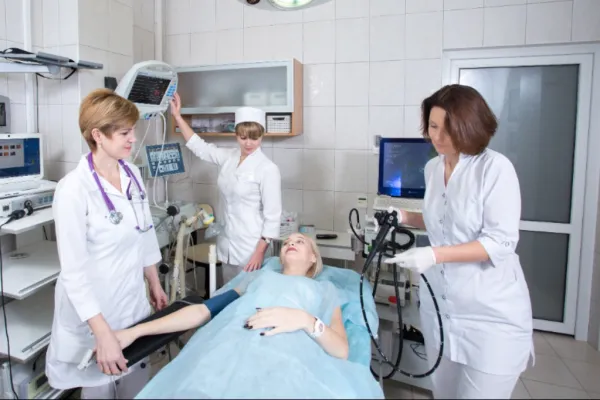
Diseases of the stomach, intestines, liver, gallbladder, and pancreas often develop gradually and may not show pronounced symptoms for a long time. A comprehensive gastroenterological check-up allows for a thorough assessment of the digestive system organs, the detection of inflammatory processes, functional disorders, neoplasms, and other diseases at early stages when treatment is most effective. In our clinic, the examination package includes:
Laboratory tests:
- Complete blood count (CBC).
- Liver panel:
- total protein;
- albumin;
- total bilirubin;
- direct bilirubin;
- ALT (alanine aminotransferase);
- AST (aspartate aminotransferase);
- alkaline phosphatase;
- GGT (gamma-glutamyl transferase).
- High-sensitivity C-reactive protein (hs-CRP).
- Pancreatic amylase.
- Lipase.
Stool analysis:
- Coprogram.
- Fecal calprotectin.
- Fecal occult blood test.
Ultrasound diagnostics:
- assessment of the size and structure of the liver;
- gallbladder;
- pancreas;
- spleen;
- functional test of gallbladder contractility;
- Doppler ultrasound of the abdominal vessels.
Endoscopic examinations:
- Esophagogastroduodenoscopy (EGDS) – inspection and evaluation of the mucous membrane of the esophagus, stomach, and duodenum under deep sedation, including a rapid urease test for the detection of Helicobacter pylori via mucosal biopsy.
- Fibrocolonoscopy – evaluation of the large intestine under deep sedation (performed as indicated, based on laboratory test results).
Gastroenterologist consultation.
Medical support at all stages of the examination.
Laboratory tests:
- Complete blood count (CBC).
- Liver panel:
- total protein;
- albumin;
- total bilirubin;
- direct bilirubin;
- ALT (alanine aminotransferase);
- AST (aspartate aminotransferase);
- alkaline phosphatase;
- GGT (gamma-glutamyl transferase).
- High-sensitivity C-reactive protein (hs-CRP).
- Pancreatic amylase.
- Lipase.
Stool analysis:
- Coprogram.
- Fecal calprotectin.
- Fecal occult blood test.
Ultrasound diagnostics:
- assessment of the size and structure of the liver;
- gallbladder;
- pancreas;
- spleen;
- functional test of gallbladder contractility;
- Doppler ultrasound of the abdominal vessels.
Endoscopic examinations:
- Esophagogastroduodenoscopy (EGDS) – inspection and evaluation of the mucous membrane of the esophagus, stomach, and duodenum under deep sedation, including a rapid urease test for the detection of Helicobacter pylori via mucosal biopsy.
- Fibrocolonoscopy – evaluation of the large intestine under deep sedation (performed as indicated, based on laboratory test results).
Gastroenterologist consultation.
Medical support at all stages of the examination.


