
Information about medicinal products published on this website is provided for informational purposes only and does not constitute advertising, a public offer, an offer for sale, or instructions for use.
The use of medicinal products is permitted only upon a doctor’s prescription. Consultations are provided by clinic specialists in person or online in accordance with applicable law.
The use of medicinal products is permitted only upon a doctor’s prescription. Consultations are provided by clinic specialists in person or online in accordance with applicable law.
CHECKUP EPILEPSIA
Epilepsy requires not only seizure control but also the investigation of potential causes, risk factors, and comorbid conditions. A comprehensive check-up allows for the assessment of metabolism, hormonal status, the function of internal organs, and the identification of changes that may affect the course of the disease and the effectiveness of treatment.
850у.е.
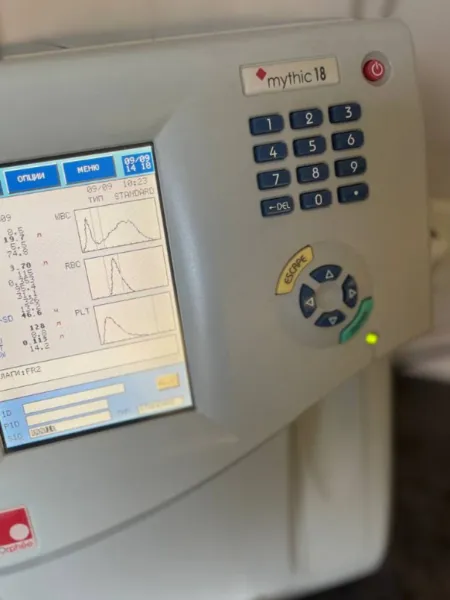
Our check-up includes:
Laboratory tests
Complete blood count (CBC) with differential
Urinalysis
Electrolytes (sodium, potassium, chloride)
Ionized calcium
Magnesium
Serum iron
Ferritin
Vitamin D (25-hydroxyvitamin D, 25(OH)D)
Homocysteine
Creatine kinase-MM (CK-MM)
Lactate (Rödger Laboratory, Germany)
Glycated hemoglobin (HbA1c)
HOMA index (glucose, insulin)
Liver panel:
Total protein
Albumin
Total bilirubin
Direct bilirubin
ALT (alanine aminotransferase)
AST (aspartate aminotransferase)
Alkaline phosphatase
GGT (gamma-glutamyl transferase)
Kidney panel:
Urea
Creatinine
Coagulation profile:
Prothrombin time (PT)
Prothrombin according to Quick (%)
INR
aPTT (activated partial thromboplastin time)
Thrombin time (TT)
Fibrinogen
Markers of viral infections:
Hepatitis B
Hepatitis C
HIV
Thyroid hormones and antibodies:
TSH
Free T4
Free T3
Antibodies to thyroglobulin (Anti-TG)
Antibodies to thyroid peroxidase (Anti-TPO)
Adrenocorticotropic hormone (ACTH)
Follicle-stimulating hormone (FSH)
Luteinizing hormone (LH)
Prolactin
Somatotropic hormone (STH, growth hormone)
Cortisol (serum)
Aldosterone
Multitest for narcotics (urine)
Ultrasound diagnostics
Cardiovascular system:
Cardiac ultrasound (echocardiography with Doppler)
Ultrasound Doppler of head and neck vessels
Ultrasound Doppler of lower limb vessels
Ultrasound of abdominal organs:
Liver
Gallbladder
Pancreas
Spleen
Thyroid ultrasound
Neurologist consultation
Medical support for the patient at all stages of the examination and when receiving results.
----------------------------------------
Additional examinations (by indication, not included in the package)
Epilepsy genetic panel (NGS, CentoGene, Rödger Laboratory, Germany)
ECG (12-lead electrocardiogram)
Echocardiography + Bubble Test
Holter ECG monitoring (24 hours)
EEG (electroencephalography) with functional tests
Brain MRI on a 3 Tesla scanner with contrast and angiographic mode (if indicated)
Cervical spine MRI
-----------------------------------------
How to prepare for the examination:
Dietary regimen
All blood tests must be taken strictly in the morning on an empty stomach. The complete fasting period should be between 8 to 12 hours. A light dinner without fatty foods is allowed the evening before. On the morning of the test, only plain still water is permitted. Coffee, tea, juices, and sweetened drinks are completely excluded.
Avoid stimulants and alcohol
Any alcohol consumption is strictly prohibited for 24 hours prior to biomaterial collection. Smoking and vaping are not allowed within one hour before blood sampling. It is also recommended to limit strong tea, coffee, and energy drinks for 24 hours to avoid distorting hormone and lactate levels.
Physical and emotional stress
Heavy physical exercise, running, and visits to baths or saunas must be avoided the day before the examination. Blood for stress hormones (cortisol, ACTH, and prolactin) should be taken when the patient is completely at rest. It is recommended to arrive at the laboratory early and sit calmly for 15 minutes before blood collection.
Rules for biomaterial collection
For urinalysis, strictly the morning midstream urine sample is used, collected in a sterile container after thorough hygiene procedures. Cortisol in saliva is collected in special tubes according to laboratory instructions, at specific times of day, before brushing teeth and eating.
Medication intake
If the patient is already taking anticonvulsants or any other medications regularly, they should not stop them on their own. However, blood sampling must be performed strictly before taking the morning dose of medications. If the patient is taking biotin or vitamin complexes, it is necessary to inform the doctor in advance, as they may affect hormone test results.
Laboratory tests
Complete blood count (CBC) with differential
Urinalysis
Electrolytes (sodium, potassium, chloride)
Ionized calcium
Magnesium
Serum iron
Ferritin
Vitamin D (25-hydroxyvitamin D, 25(OH)D)
Homocysteine
Creatine kinase-MM (CK-MM)
Lactate (Rödger Laboratory, Germany)
Glycated hemoglobin (HbA1c)
HOMA index (glucose, insulin)
Liver panel:
Total protein
Albumin
Total bilirubin
Direct bilirubin
ALT (alanine aminotransferase)
AST (aspartate aminotransferase)
Alkaline phosphatase
GGT (gamma-glutamyl transferase)
Kidney panel:
Urea
Creatinine
Coagulation profile:
Prothrombin time (PT)
Prothrombin according to Quick (%)
INR
aPTT (activated partial thromboplastin time)
Thrombin time (TT)
Fibrinogen
Markers of viral infections:
Hepatitis B
Hepatitis C
HIV
Thyroid hormones and antibodies:
TSH
Free T4
Free T3
Antibodies to thyroglobulin (Anti-TG)
Antibodies to thyroid peroxidase (Anti-TPO)
Adrenocorticotropic hormone (ACTH)
Follicle-stimulating hormone (FSH)
Luteinizing hormone (LH)
Prolactin
Somatotropic hormone (STH, growth hormone)
Cortisol (serum)
Aldosterone
Multitest for narcotics (urine)
Ultrasound diagnostics
Cardiovascular system:
Cardiac ultrasound (echocardiography with Doppler)
Ultrasound Doppler of head and neck vessels
Ultrasound Doppler of lower limb vessels
Ultrasound of abdominal organs:
Liver
Gallbladder
Pancreas
Spleen
Thyroid ultrasound
Neurologist consultation
Medical support for the patient at all stages of the examination and when receiving results.
----------------------------------------
Additional examinations (by indication, not included in the package)
Epilepsy genetic panel (NGS, CentoGene, Rödger Laboratory, Germany)
ECG (12-lead electrocardiogram)
Echocardiography + Bubble Test
Holter ECG monitoring (24 hours)
EEG (electroencephalography) with functional tests
Brain MRI on a 3 Tesla scanner with contrast and angiographic mode (if indicated)
Cervical spine MRI
-----------------------------------------
How to prepare for the examination:
Dietary regimen
All blood tests must be taken strictly in the morning on an empty stomach. The complete fasting period should be between 8 to 12 hours. A light dinner without fatty foods is allowed the evening before. On the morning of the test, only plain still water is permitted. Coffee, tea, juices, and sweetened drinks are completely excluded.
Avoid stimulants and alcohol
Any alcohol consumption is strictly prohibited for 24 hours prior to biomaterial collection. Smoking and vaping are not allowed within one hour before blood sampling. It is also recommended to limit strong tea, coffee, and energy drinks for 24 hours to avoid distorting hormone and lactate levels.
Physical and emotional stress
Heavy physical exercise, running, and visits to baths or saunas must be avoided the day before the examination. Blood for stress hormones (cortisol, ACTH, and prolactin) should be taken when the patient is completely at rest. It is recommended to arrive at the laboratory early and sit calmly for 15 minutes before blood collection.
Rules for biomaterial collection
For urinalysis, strictly the morning midstream urine sample is used, collected in a sterile container after thorough hygiene procedures. Cortisol in saliva is collected in special tubes according to laboratory instructions, at specific times of day, before brushing teeth and eating.
Medication intake
If the patient is already taking anticonvulsants or any other medications regularly, they should not stop them on their own. However, blood sampling must be performed strictly before taking the morning dose of medications. If the patient is taking biotin or vitamin complexes, it is necessary to inform the doctor in advance, as they may affect hormone test results.


